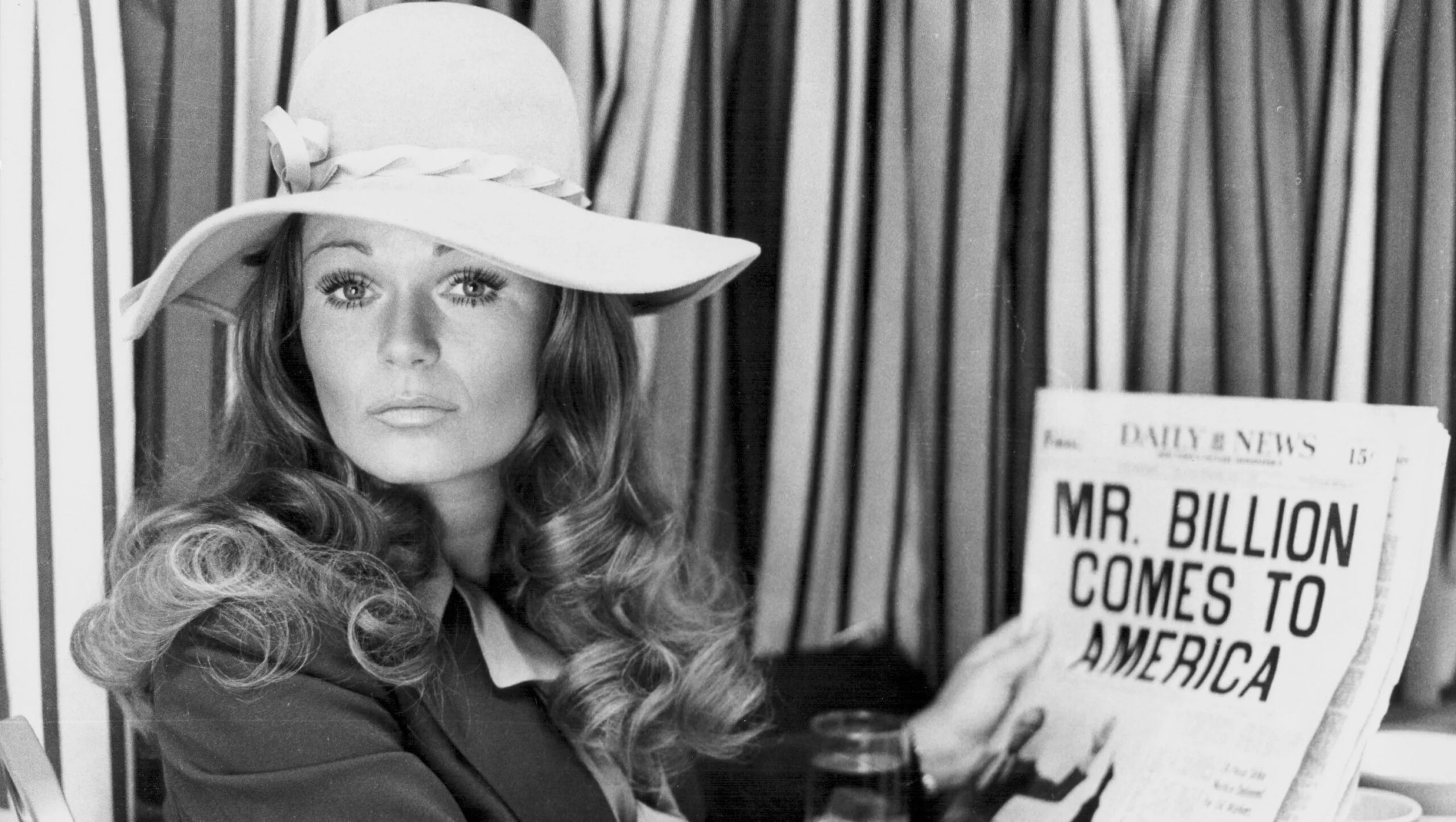
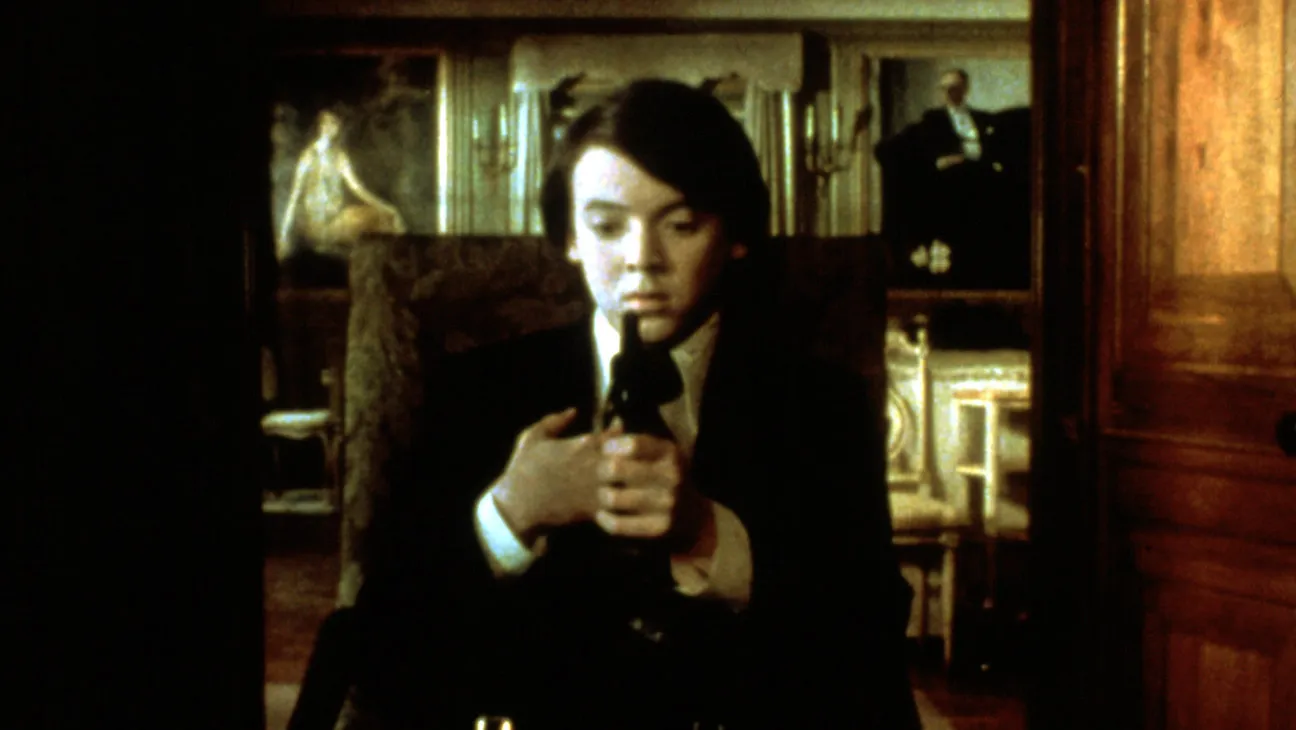
It was a startling omission. An actor barely out of his teens when he burst onto the scene in Hal Ashby’s 1971 cult black comedy Harold and Maude, Bud Cort made such an indelible impression that both he and the film he starred in (as Ruth Gordon’s decades-younger acolyte/lover) were catapulted to iconic status almost overnight. His was the kind of success story Hollywood lives for—yet this year, on the heels of his death in February, the Oscars telecast did not see fit to acknowledge Bud Cort in its In Memoriam section. Despite his place in the hearts of millions who continue to treasure Harold, he didn’t even merit a split-screen cameo.
If Bud were still alive, I can picture him responding to the snub with a casual mention of the telecast’s poor ratings, a twinkle in his eye.
It was 1984. A decade and change after the performance that first set his professional life ablaze, Bud wanted to write his memoirs.
I was an editor at a small press, and a writer we both knew told him I was the person he should meet. I can still picture him walking into my office, sitting across from me, talking in his soft voice.
He told me he had been rear-ended on the L.A. freeway.
“I physically left my body,” he said. “I could look down and see my body in the car from where I was hovering from above, and I remember I had to make a conscious decision whether or not to go back to it. I made the decision to go back. I didn’t have to. I’m still not sure I made the right decision.”
Although the driver who rammed into him was clearly at fault, and the law in L.A. was on the side of the rammee, the other man sued Bud, painting him as a profligate entitled celebrity. Somehow the driver won — his lawyer brought up the Conehead characters from Saturday Night Live to argue that the damage Bud was left with from the accident was a makeup, a disguise, some sort of fancy special effect — and he was forced to pay an obscene amount of money to the man who had nearly killed him.
His delicate beauty was altered by a receding hairline and a long scar on his forehead he immediately pointed out to me, evidence of that accident on the freeway.
He thought he had the makings of a good memoir, he said. I was surprised to learn he had been born in Rye, New York; he seemed to me a pure California creation. Out West he was an orphan of sorts, he told me, barely in his twenties when he’d basically moved in with Groucho Marx and his wife. He found not only new family and shelter but a bonus: the Marxes entertained continuously, so in the years he lived with them, Bud met practically every celebrity in Hollywood.
At the time he was radiantly young, even more innocent than his years. He told me about sitting by the pool when someone came over and started talking to him and he knew he was in love, for the first time madly in love.
It was Barbra Streisand. She loved him too, he said.
***
I’d had a minimal impression of Bud before we met. He’d been a pale wide-eyed boy in a few fraught scenes in Robert Altman’s M*A*S*H, his film debut. I remember his ghostly pallor, his Beatles-mop dark dark hair, his painful bespectacled innocence. From the start he was apparently an actor who felt he should be the star of whatever movie he was in, and he got his wish in his second turn with Altman, the oddity Brewster McCloud, playing a boy obsessed with birds and convinced he could fly (and also possibly a murderer). I can’t say it really worked.
Nor did I particularly enjoy Harold and Maude, the movie that made his fame. Though it pains me to admit it, I found it unsubtle, though that had more to do with Ruth Gordon than Bud. But meeting him altered something. The second time I saw M*A*S*H*, it landed differently as I watched Bud: the complicated nature of his actual being seemed to fight against the tiny role, as if there were a whole other movie his character was in, and the movie I was watching was missing it.
My second viewing of Harold and Maude was even stranger — all I could do the entire time I watched was try not to cry. I felt everything roiling inside that moonfaced boy, the one I now knew as a fragile, complicated adult. He wasn’t simulating emotions, pretending, covering; he was raw.
***
I hadn’t expected to find him captivating when he walked into my office. And that same year when he returned to New York for an Off-Broadway production of Endgame, I discovered something else I hadn’t known: he wasn’t just a unique, odd creature, somehow both angelic and sepulchral, vivid and elusive. I saw the person I knew as vulnerable, unfiltered, heartbreaking, and he was all those things, but he was also a brilliant actor, born to the stage. Watching him make sense of theabsurdist piece, bring it to life in multiple dimensions, it occurred to me why actors would want to do Beckett. The challenge was to create something from a different language entirely, thin air and metaphysics, and Bud transformed it; he was touching and scathingly funny. I hadn’t known he could do it; that anyone could.
***
My first trip out to L.A., in 1988, I called the number Bud had given me.
“I thought of you yesterday,” he said when he heard my voice. “I was going to invite you to the opening of Big Top Pee-Wee.” I wondered how (if) he could have known I was in town before I’d called. “Usually openings aren’t that much fun, but this was a good one.” He asked if I wanted to come with him to a party that evening.
I hadn’t packed any clothes remotely glamorous enough to wear, and I was scared to face what surely awaited me, but saying no felt like a mistake I couldn’t afford to make.
Bud drove up in his car, which was more butch than I expected, maybe a Jeep. He seemed assured, a complete adult behind the wheel. We headed to Woody Harrelson’s bungalow in Malibu.
A few years later our party’s host would appear in an odd little feature Bud directed, co-wrote and starred in, Ted & Venus, about which perhaps the less said the better. That night, though, Bud decided he’d schmoozed the requisite amount after about an hour and came to me with a new plan: we were going out to dinner. (“There’s never any food at these.”) A few of his friends would join us: the actor Teri Garr, with her dentist boyfriend (who would ultimately pay the check); comedian Jon Lovitz and his twin sister, unexpectedly blond.
We stood in line outside a small building, a buzzy Malibu restaurant, enduring the inevitable wait. “Do they know we’re here?” said Teri Garr, “Do they know who we are? Who are we?”
At last we were brought inside and seated at a round table, Bud on my right. Jon Lovitz, to my left, did not look at me during the meal, but when I inevitably spilled my water, he reached across the table and wiped up the mess without a word.
Rob Lowe was at the table next to us, with a woman and two guys. Fairly soon after we were seated, I noticed he was no longer at his table but standing drinking at the tiny bar across the room. His gaze was fixed longingly on Bud.
“Oh, there’s Rob Lowe,” Bud said at some point, mentioning how pretty he was. “He has the tiniest scar near his mouth.”
“He’s only been cruising you nonstop since we got here,” I said.
Bud demurred, then mentioned how underrated the actor was: “He was very good in that movie—”
Rob Lowe was abruptly standing beside Bud’s chair, vibrating.
“I’ve loved you ever since I was 5 years old,” he said.
It felt as if young Rob would have done anything Bud asked of him, if there were even a chance that some of Bud’s talent might rub off on him.
Bud stood and the two began talking about art and craft.
Teri Garr turned to me, raising her eyebrows. “Isn’t this thrilling?!” she said.
***
A few months later I was back in New York when I heard from Bud again. Barely an hour before a matinee of Waiting for Godot at Lincoln Center, he called and asked if I could join him. He’d flown out to see a few of his well-heeled friends in the play’s performance—more Beckett!
On stage Steve Martin treated the material disdainfully, as if he were above it, perhaps unequipped to make it real. After the show we hid until the actor had gone; Bud didn’t want to lie to his friend about his performance. Going downstairs to the small dressing room the cast all shared, we found Robin Williams, F. Murray Abraham and Bill Irwin in various stages of post-show unwind.
Bill Irwin introduced Bud to F. Murray Abraham. “I don’t know you. Should I?” Abraham said,loudly and coldly. This was payback; Irwin hadn’t recognized an illustrious friend the older actor had introduced him to. Irwin, whose house seats we’d been sitting in, rushed to soften the blow, and Bud reacted more graciously than I would have expected. He moved to introduce me to Abraham, who turned away from me as he limply allowed my handshake. I repeated my name crisply, a small gesture of defiance.
Meanwhile Robin Williams, who during the show had interspersed the text with his characteristic manic improv, stood dressing quietly. None of the others actors in the dressing room spoke to him. He looked at me as I stood hovering in the doorway.
“Hello,” he said, almost tenderly.
“Hi!” I said, my voice tiny as a child’s.
I can’t remember how long ago it was that I last called Bud, which visit to L.A. He never called me back. I think I tried calling again a few years later, his L.A. number and then the number I had for him in Rye, but I may be making that up. I don’t think he ever called me again to say he was in New York.
Maybe we did keep trying a few more times, missing each other. Maybe I disappointed him, or the connection just went silent.
He was a mesmerizing storyteller, with an endless supply of stories, but he seemed very, very troubled. I don’t want to say neurotic, but he seemed plagued.
I was surprised to learn he’d was in Connecticut when he died, as if somehow if I’d known he was on the East Coast, it would have made a difference. Nursing home; long illness… Would he have answered if I’d reached out? Would I have gotten to hear his voice again, seen his shimmering pale face?
He never did write those memoirs. I’d still like to read them.
Helen Eisenbach is a journalist and author. Her essays, reviews, and interviews have appeared in the Huffington Post, New York magazine and the New York Times, among other publications.