Writer-director Luchina Fisher’s documentary The Dads, a portrait of assorted American fathers trying to support their trans and non-binary children in these dark times, is both painfully timely and blessedly hopeful, a warning and a balm in one handy package.
Built off the foundation laid by Fisher’s 2023 short of the same name about some of the same subjects, the film gets across the diversity of these parents’ experiences, ranging from dads who didn’t get it at first to others who were quicker to understand and accept their children’s feelings. Clearly, the idea is to open up multiple entry points of empathy for cis people trying to get to grips with trans identity, should they be close to someone of that persuasion or not, without sounding patronizing. It certainly works by that yardstick, making this the perfect film to recommend to confused grandparents or naïve neighbors to help them understand at least a little bit what families like this might be going through.
The Dads
The Bottom Line
A big bear hug of a film.
Venue: SXSW Film Festival (Documentary Spotlight)
Director/screenwriter: Luchina Fisher
1 hour 12 minutes
That said, given how complex the issues around trans identity are, it’s not hard to envision some viewers taking umbrage with the fact that the film doesn’t give more voice to trans children themselves or take the opportunity to argue more forcefully for, say, the safety of puberty blockers. On the other hand, some viewers might feel just the opposite — that the film ducks out of addressing white-hot topics such as trans women and girls in women’s sports or the studies that don’t support medical interventions for children under 18 and so on.
Indeed, in its eagerness to emphasize community and camaraderie with the wider, general resistance to right-wing legislators and bigots, the film smooths over the many-splendored variety of trans and gender-expansive identity. But that’s fine. No film could please everyone with a stake in this subject.
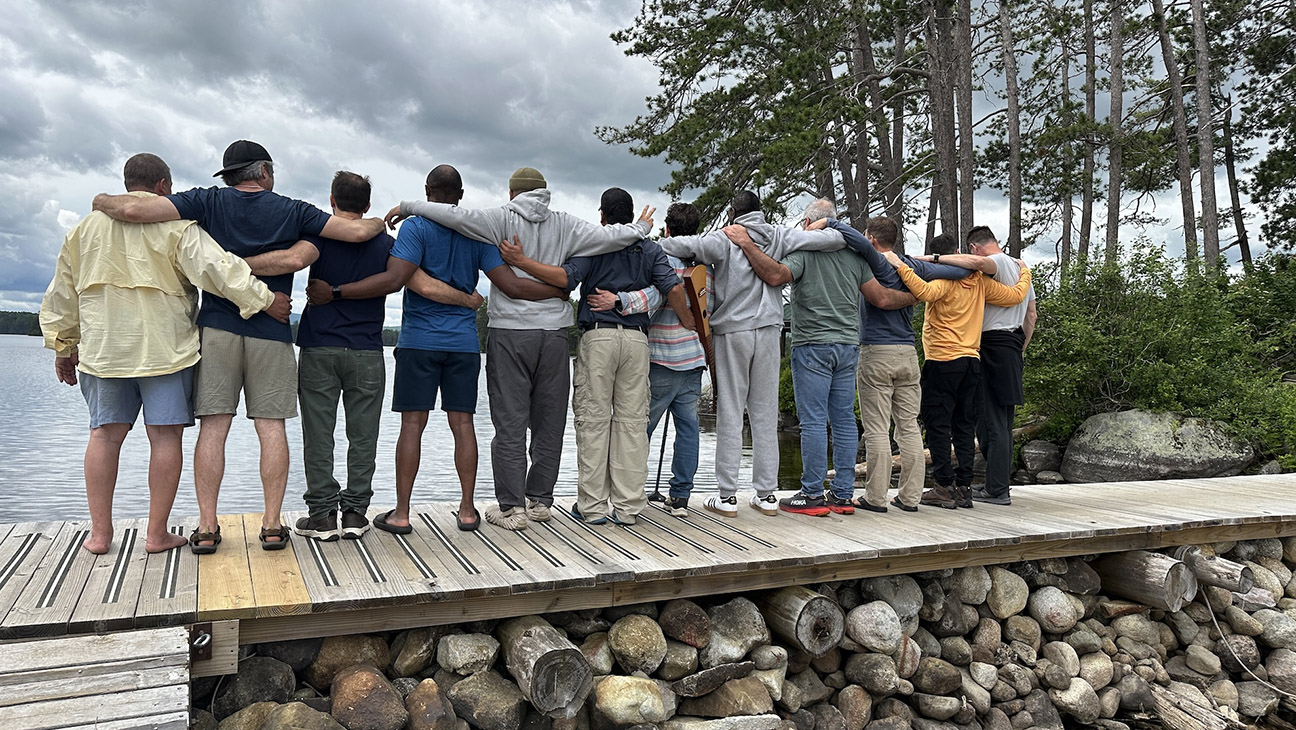
What Fisher and her team do manage very well is getting the subjects to open up for the camera, even the men who are clearly less comfortable talking about feelings and vulnerability. It helps that a significant chunk of both this and the original short was shot at a retreat a bunch of dads started back during the Biden administration with just enough guys to fit around an average-sized dining table, a congenial setting that puts the men at ease. Hell, the movie even opens with several of the men fishing together off a lakeside dock — could any activity be more emblematic of straight, middle-class, American dadness?
One of the dads, Wayne Maines, for example, ticks nearly every box of that butch stereotype. A sturdily built, soft-spoken fellow who loves the outdoors, Maines is seen here looking very much at home with a fishing pole in his hand. It turns out he’s one of the OG Dads thrust into the spotlight after his daughter Nicole Maines, now an actor, hit the headlines when she came out as trans at her elementary school in Maine, where the family used to live.
The family was essentially hounded out of their home state, something that several other fathers could relate to here. At least two subjects, Ed Diaz and Christoph Heizner, live in more conservative states (Texas and Arizona, respectively). By the end of the film, which starts a bit before the 2024 election and the first year of Donald Trump’s 2.0 presidency, with its deluge of anti-trans executive orders and court decisions overturning the right to gender-affirming care, both men and their families are in the process of moving out of the country.
Massachusetts resident Stephen Chukumba, who featured in the original short and has stepped up to producing for this feature, faces less drastic life choices, especially since his transgender son Hobbes, a delightfully phlegmatic, unflappable kid, is now old enough to go off to university. You can tell Stephen is fretting about Hobbes’ decision to stay in a regular men’s dorm instead of an LBGQT+ block, but by the end of the film nothing bad has happened, suggesting Hobbes’ peers are perhaps more accepting of difference, or at least respectful of privacy, than his dad might have feared.
Of course, that doesn’t mean Stephen will ever stop worrying about Hobbes’ safety and happiness, because, like all the men here, he’s a devoted and loving father. That protectiveness, the essence of what really makes a man, is touchingly celebrated throughout.