Dhurandhar 2 feels like every Hindutva supporter’s fantasy captured on screen by Aditya Dhar. It portrays Muslims as barbaric and Sikhs as drug addicts. Sikh rebel groups are shown as being in cahoots with the ISI in transporting drugs.
Even though the main protagonist played by Ranveer Singh is also a Sikh, he is acceptable only because he aligns with their version of nationalism.
In one instance, the protagonist’s old friend comes to Karachi with two other turbaned Sikhs involved in drug transport from Pakistan. The friend, Pinda, tells the protagonist Hamza/Jaskirat that he will take him to Punjab “when we get freedom”, directly linking the separatist movement with drugs and an ISI-led conspiracy.
Sikhs are accepted only when they fight for the nation. The moment they demand rights, they are labelled separatists, accused of being in cahoots with the ISI, and delegitimised.
During the farmers’ protest, a similar narrative was pushed by BJP-aligned media organisations – that these were “Khalistanis” and part of an international conspiracy to defame the government.
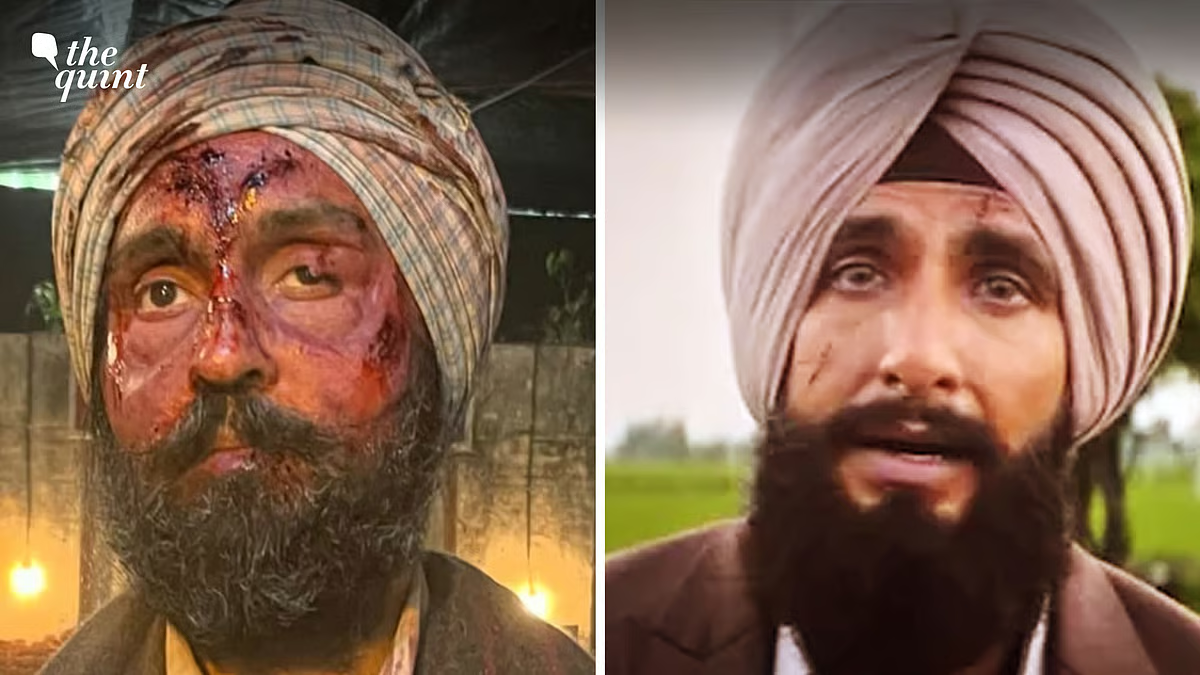
Diljit Dosanjh, who plays Khalra, is celebrated as a hero in Border 2, where he plays a patriotic role against Pakistan. But the same Diljit in Punjab 95 faces censorship—because that story goes against the state’s narrative.
The construction of the protagonist in Dhurandhar further illustrates how identity is strategically deployed. The main character, Jaskirat Singh Rangi, played by Ranveer Singh, is given a distinctly Sikh name. However, his Sikh identity is largely superficial within the narrative. He is shown smoking and drinking, actions that are generally discouraged within Sikh religious practice. When Major Iqbal played by Arjun Rampal says let’s fund a Punjab rebel group, it just portrays Punjab as a disturbed region, though the ground reality is very different in Punjab in the period referred to in the film.
This selective use of identity is significant. By assigning the character a Sikh name while stripping away the substantive elements of Sikh identity, the film perpetuates a particular trope: that “real” Sikhs are defined primarily by their nationalism and their willingness to sacrifice for the country. This aligns with a broader ideological project that seeks to incorporate Sikh identity into a homogenised national framework, rather than acknowledging its distinct religious and cultural foundations.
Then there are films like Animal, Uri, and Chhava, which do not openly declare ideological allegiance but reinforce similar ideas through their storytelling. These films operate more insidiously, embedding political messaging within character arcs and emotional narratives. Animal, for instance, offers a telling example. Ranbir Kapoor’s character is depicted as having mixed Hindu-Sikh heritage, a detail that may appear incidental but carries deeper ideological implications. The character is shown smoking, participating in Hindu rituals such as havan, and even consuming gau-mutr. These choices are not merely about character development; they subtly gesture toward a broader project of cultural assimilation, one that aligns with the idea of subsuming Sikh identity within a larger Hindu framework.
Coming back to Dhurandhar, when a character inspired by Ajit Doval—Ajay Sanyal—meets Hamza/Jaskirat who has been wronged by a local MLA, he recites Gurbani after smoking a cigarette. For many Sikhs, this is not just inappropriate—it borders on sacrilege, as it disrespects both Gurbani and Sikh maryada. Not surprisingly, a case has been filed against the makers of the film for hurting religious sentiments.
The Bani he recites is by Bhagat Kabir:
ਸੂਰਾ ਸੋ ਪਹਿਚਾਨੀਐ ਜੁ ਲਰੈ ਦੀਨ ਕੇ ਹੇਤ ॥
He alone is known as a true warrior who fights for the oppressed and for righteousness.
ਪੁਰਜਾ ਪੁਰਜਾ ਕਟਿ ਮਰੈ ਕਬਹੂ ਨ ਛਾਡੈ ਖੇਤੁ ॥੨॥੨॥
Even if he is cut into pieces, he never abandons the field of battle.
But the context in which this Gurbani is used becomes deeply problematic. At a time when the Modi government is accused of targeting people on the basis of religion, and when attacks on minorities are increasingly reported, invoking Gurbani to frame a fight for the nation as a religious duty distorts its meaning.
It subtly suggests that a “true Sikh” is one who fights external enemies like Pakistan, while those who raise dissent within the country are labelled as Khalistanis or rebels. This contradiction exposes a paradox in Aditya Dhar’s cinematic narrative—where faith is selectively invoked to serve nationalism, while dissent is delegitimised.
If Aditya Dhar really wanted to understand Punjab and Sikhs, he could have spoken to his father-in-law, Mukesh Gautam—a Punjabi director who has created several documentaries on Punjab’s cultural and spiritual figures like Sheikh Farid and Waris Shah. His work, movie Baghee di Dhee inspired by the Ghadar movement, has even won a National Award.