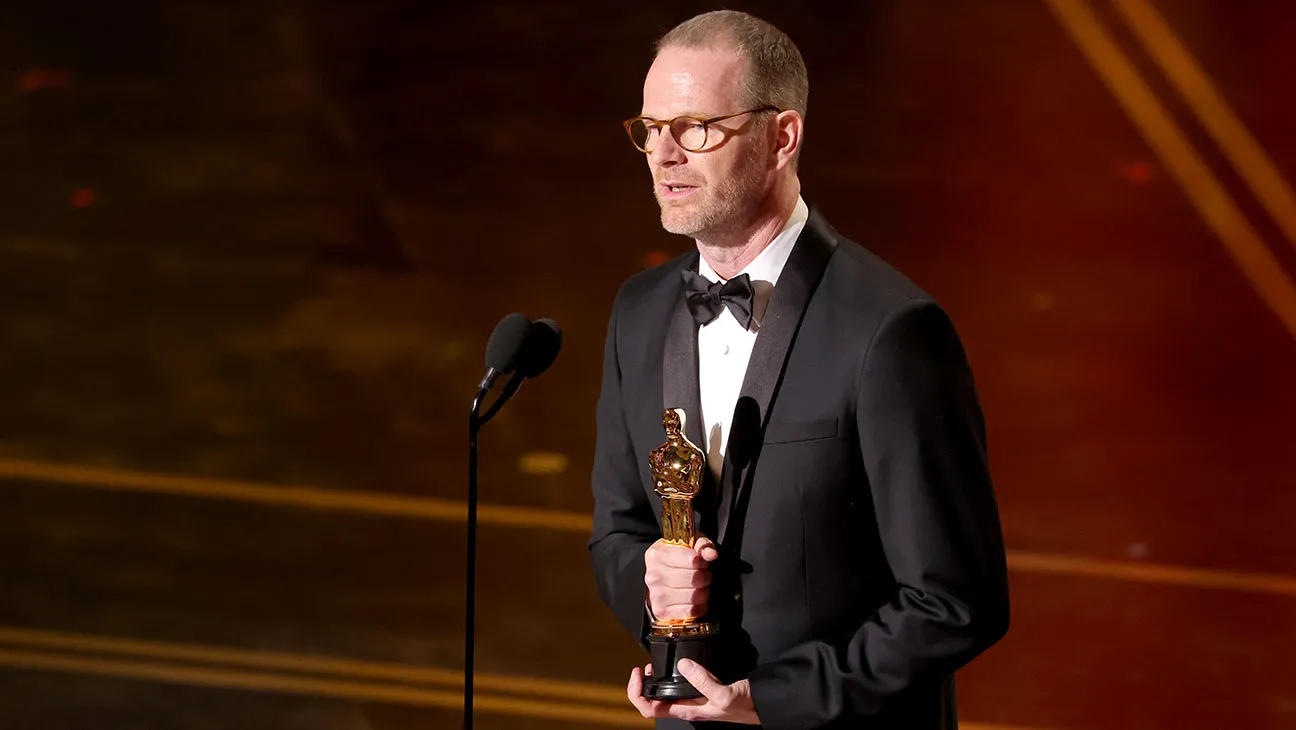
“I’m just a film nerd from Norway,” said Sentimental Value director Joachim Trier, in his typically self-effacing manner, as he accepted the Academy Award for best international feature on Sunday — Norway’s first-ever Oscar win.
For Norway’s film community, those watching from inside the Dolby Theatre — Norwegian Film Institute CEO Kjersti Mo and Norway’s Minister of Culture and Equality Lubna Jaffery attended the Oscar ceremony alongside the Sentimental Value team — and those cheering from Oslo, Trier’s triumph was a signal that the country has, at last, arrived.
“This is a historic moment for Norwegian cinema, and we are trying to make the most of it,” said Mo, speaking to The Hollywood Reporter. “We have long been the underdogs in Scandinavian cinema, compared to Sweden and Denmark, so this means the world to us.”
The Oscars weren’t just Trier’s triumph. Sentimental Value picked up nine Academy Award nominations, above and below the line, including best actress and best supporting actress nominations for Renate Reinsve and Inga Ibsdotter Lilleaas; an original screenplay nom for co-screenwriter Eskil Vogt; and a best editing nomination for Olivier Bugge Coutté. Other Norwegian talent on display at the Dolby Theatre Sunday night included Thomas Foldberg and Anne Cathrine Sauerberg, nominated for best makeup and hairstyling for their work on Emilie Blichfeldt’s The Ugly Stepsister, and Espen Nordahl of Oslo’s Storm Studios, part of the VFX team nominated for Sinners.

Lea Myren in The Ugly Stepsister, directed by Emilie Blichfeldt.
Marcel Zyskind/Courtesy of Sundance Institute
Norwegian cinema is going through a creative and commercial golden age, with a steady stream of internationally recognized talents and titles coming out of the tiny Nordic nation (pop. 5.6 million, roughly that of Minnesota). Halfdan Ullmann Tøndel’s Armand, starring Reinsve, made the international feature shortlist for the 2025 Oscars. Dag Johan Haugerud’s Dreams, the final entry in his much-praised Oslo Stories Trilogy, won the Golden Bear in Berlin last year. The Drama, A24’s hotly anticipated rom-com from Norwegian director Kristoffer Borgli (Sick of Myself, The Dream Scenario), starring Zendaya and Robert Pattinson, hits theaters worldwide next month.
While Norway’s Oscar victory might look sudden or accidental, it was anything but. In the last few decades, successive Norwegian governments have been funneling the country’s oil wealth into culture, slowly building a system designed to nurture both artistic ambition and commercial viability, creating a national film industry from the ground up.
“In Norway, we don’t have this same cinema history as they do in Sweden, with [the legacy] of Ingmar Bergman, or Denmark with Lars von Trier and the Dogme movement,” says Yngve Sæther, of Oslo-based Motlys, producer of the Oslo Stories Trilogy. Norway was always “the little brother” to the grown-up movie nations, says Sæther. “When I started, there wasn’t even a film school here. I had to go to Sweden to study.”
Selome Emnetu (left) and Ella Øverbye in Dreams.
Agnete Brun
A series of reforms in the late 90s and early 2000s set the groundwork for a Norwegian film industry. The Norwegian Film School was opened in Lillehammer in 1997 by an act of parliament. (Tuition, as is the case for all public universities in Norway, is free.) The government also centralized its film funding and support structures within the Norwegian Film Institute (NFI), boosting funding for home-grown films. Last year, Norway invested around $70 million in a series of programs, from direct production subsidies to tax rebates to co-production support.
“The international success we are seeing now is largely the result of long-term public investment in the film industry,” notes Mo.
From the start, the system was designed to find and develop local talent.
“Joachim Trier’s first [NFI-backed films], like Oslo, August 31, and Louder Than Bombs, weren’t big commercial hits,” notes Kjetil Lismoen, editor-in-chief at Rushprint, a Norwegian film industry magazine. “But the system was patient enough to give him time to bloom.”
The Norwegian model also includes commercial incentives. Funding decisions for arthouse projects are made by independent commissioners, operating at arm’s length from political and industry pressure, while parallel schemes, linking funding to box office performance, are designed to support more market-oriented films aimed at a local audience.
“These are mostly children’s films and World War II dramas, which are hugely successful locally,” says Lismoen. “They’ve really helped bring Norwegians into the cinemas to see films in their own language.”
During the early 2000s, the market share for local-language films in Norway hovered around 10 percent. It now regularly tops 25 percent. Last year, more than a third of all tickets sold in the country were for Norwegian titles, including kids’ movie A Mouse Hunt for Christmas and WWII drama The Battle Of Oslo, which outperformed Hollywood blockbusters with Norwegian audiences.
“Without this large local market share for Norwegian films, I don’t think it would have been politically possible to keep funding the arthouse movies,” says Lismoen.
More recently, the NFI has introduced commercial incentives for arthouse projects. Producers are actively encouraged to seek international partners, with incentives tied to global sales performance.
“If you manage to get a sales agent on board with a big minimum guarantee, or secure pre-sales, that can boost [state support],” notes Sæther. “It encourages us to look outside Norway and be more internationally oriented.”
Sentimental Value received nine Oscar nominations, including for Best Picture.
Christian Belgaux
When it works, the result is a bigger budget for a more globally viable movie. Sentimental Value, with a reported budget of around $8 million, would have been impossible to finance from Norway alone. Trier set it up as a co-production across six European countries. The film has grossed more than $22 million worldwide to date, making it the most commercially successful Norwegian movie of all time.
As it has grown in international stature, Norway’s movie industry has, so far, remained true to its roots.
“We are still a small country with a strong social-democratic tradition,” notes Norwegian director Yngvild Sve Flikke (Ninjababy). “I keep hearing that our films are very honest and relatable. And I think they are, in part, because, ultimately, all of us come from simple stock. We all stem from farmers and fishermen.”
That humble ethos still extends to how films are made.
“The way we produce films in Norway is very different than in the U.S., where you have these big, huge, hierarchical structures. Norway is more egalitarian,” says Lismoen. “In Norway, you can’t get away with acting like a big star on set. Trier, as an artist, is uncompromising. But as a person, he’s very soft-spoken, and as a director on set, he is very human. I think that’s one of the reasons for his success here.”
But even as Trier, and Norway, celebrate their Oscar triumph, pressure is building beneath the surface.
In the boom years, generous state funding was matched by a surge of investment from streaming platforms, backing high-end local series and ambitious features. In 2022, Netflix backed Roar Uthaug’s Troll, a big-budget fantasy action film that was a global hit, drawing more than 100 million views worldwide. But that wave is receding. Local streaming giant Viaplay has exited local fiction production entirely, while Netflix, HBO Max, and Amazon have shifted toward more conservative “local-for-local” strategies, narrowing the space for bigger, internationally oriented projects. Financing has tightened across the board, with more films chasing fewer buyers.
“It’s both a golden age and a crisis,” says producer Yngve Sæther. “The challenge now is how we continue to surf this wave — and not get swallowed by it.”
That paradox is felt across the industry.
“We finally feel like we’ve arrived,” says Troll producer Espen Horn. “And yet it’s probably the most difficult time ever to get things financed.”
As Joachim Trier stood on the Dolby Theatre stage, clutching Norway’s first Academy Award, the moment marked the culmination of a decades-long national project — built patiently, deliberately and with oil money turned into cultural capital.
The Norwegian film industry has spent 20 years proving it belongs on the global stage. The next test may be whether it can afford to stay.