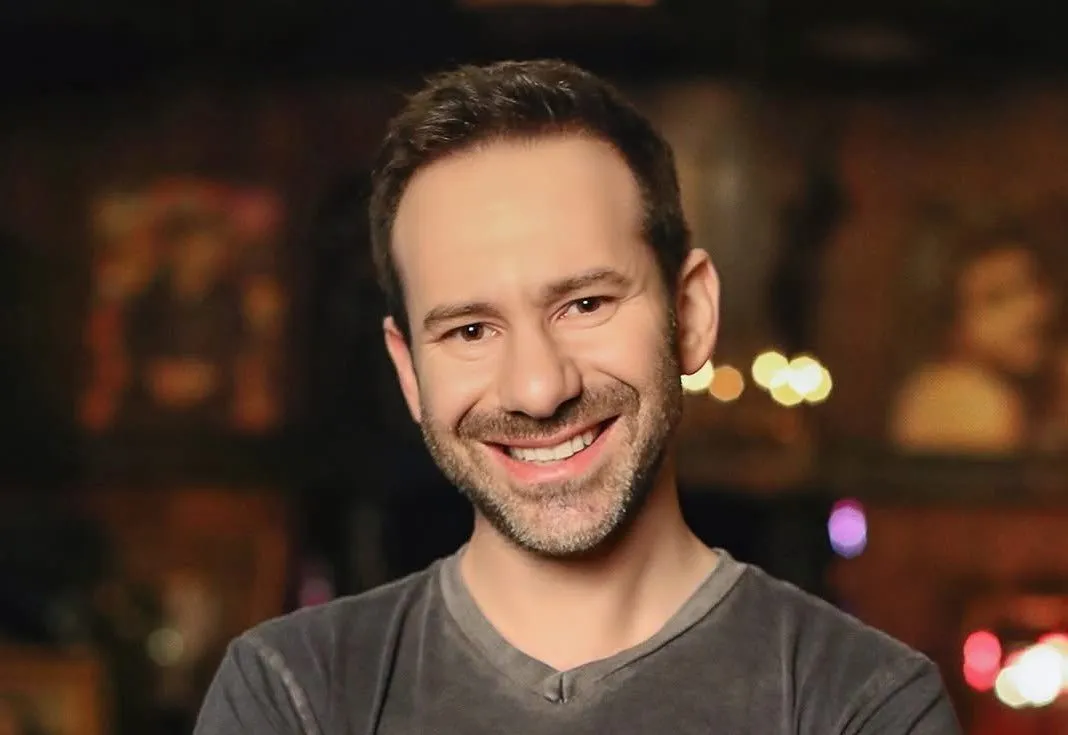
A brief statement from OnlyFans revealed on Monday that company owner Leonid “Leo” Radvinsky had “passed away peacefully after a long battle with cancer” three days earlier.
The statement was typical of the low profile the 43-year-old Radvinsky had cultivated since his very beginnings as a serial entrepreneur in the “wild west” years of the online adult industry in the late 1990s. But although to mainstream reporters he could be an elusive and opaque figure — the Reuters obituary led with “secretive billionaire owner” — in the close-knit world of the adult business, many remembered him fondly and with reverence as one of their own.
“Across his many ventures, Leo forever changed this industry in a positive way and put the power of production in the hands of the performers,” veteran industry stakeholder Dan Leal told The Hollywood Reporter. Others on industry-only forums like XBIZ.net memorialized Radvinsky as a soft-spoken, thoughtful presence who eschewed the flashier behavior of other founders and owners as he cannily grew his portfolio from questionable affiliate-marketing homemade sites all the way up to being listed by Forbes as a bona fide billionaire in 2021 before he turned 40.
According to the same publication’s trackers, Radvinsky died having more than doubled his net worth, to $4.7 billion, in the last five years.
Radvinsky’s progress began in the Chicago area, where the tech-savvy Ukrainian immigrant teenager showed a talent for figuring out how to turn a profit with the internet, a tricky prospect in the now almost mythical days of Web 1.0. Between those colorful early days (a 2021 Forbes investigation dug up what they called “the shady history” of his foray into “free password” sites) and his coronation as the OnlyFans billionaire, Radvinsky was known in the adult industry for his enormous success with one of the leading camming platforms, MyFreeCams (MFC). As the MFC overlord, Radvinsky made himself available to the site’s cam models to personally troubleshoot any issues with the platform, especially around payments.
“You could always reach him directly through his ADMINLEO account,” Ginger Banks, a model who earned much of her income through the site, told THR. “He once told me, ‘When I got into this, I never realized that I would be financially responsible for so many people’s money. I gotta make sure everyone gets paid.”
Figuring out how to collect money from cam watchers and fans in general was always Radvinsky’s superpower as a businessman. From the early days with password and video link sites, to the MFC years, to his takeover of OnlyFans’ parent company, Fenix International, in 2018, two years after the platform launched, Radvinsky had mastered the difficult art of navigating corporate and government restrictions to make sure “everyone got paid.”
After Radvinsky’s death, chatter on X mushroomed along predictable lines. Many cam models and OnlyFans creators celebrated his legacy as someone who put regular checks in their accounts. Other sex workers criticized him as a figure who took a cut of the fruits of their bodies’ labor and (maybe) was behind OnlyFans’ botched 2021 attempt at purging sex content from the site.
Anti-porn crusaders of all ilks also hijacked the news of Radvinsky’s passing for their various pro-censorship agendas. In death, as it had been in life, he was also unfortunately the target of a persistent, virulent strain of toxic antisemitism that is particularly obsessed with any Jewish person of note in the adult industry.
One much less incendiary point of contention about his legacy was the extent of his personal involvement in OnlyFans’ blockbuster success. The company was founded by Tim Stokely and other members of a traditional UK banking family. According to reporting by the Financial Times — and an entire episode of their Hot Money podcast series — Stokely dabbled in several adult-oriented online businesses for “glamour models” and financial dominatrices, before starting OnlyFans in 2016.
Anyone familiar with adult media in the mid 2010s will tell you that “premium social” — the generic name for a paywalled social media platform where fans can subscribe for “spicy content” (a common euphemism forced by Meta’s incoherent language policing policies) and also to buy videos, pay for chats, etc. — was already a thriving sector when OnlyFans launched. Many players of the time — with names like FanCentro, SexPanther, Flirt4Free — advertised at trade shows like AVN and XBIZ to try to onboard as many models (who brought along their fan bases) as possible.
By 2018, the Stokely version of OnlyFans was certainly one of those players but by no means the front-runner. Around that time, according to several accounts, OnlyFans had some issues with its payment processing. This could be the kiss of death for a company marketing itself as a way for models to get paid directly by their fans.
But instead of folding, like other companies did, OnlyFans sold to Radvinsky, who became the majority owner of the company. The rest, as they say, is online porn history: fueled by pandemic traffic, a massive, strategic marketing campaign, and ADMINLEO’s well-oiled payment machine honed during the MFC days, OnlyFans soared above their competitors.
”Leo wasn’t the first to market for models selling directly to the customer, but he was the first to market it well,” Leal told THR.
Soon enough, Beyoncé was crooning to Megan Thee Stallion, “Hips TikTok when I dance/On that Demon Time she might start an OnlyFans,” Bella Thorne was claiming to be making millions out of comparatively demure content, and a whole discourse popped up around your friends and neighbors becoming “OF girls.”
Just as “Pornhub” became vernacular for the tube site sector — steamrolling over YouPorn, RedTube, etc. — “OF” became short for premium fan site. The New York Times has heard about it (and probably published a tendentious op-ed about it. Even your mom has heard about it.
“I took a hiatus from the industry, and when I came back, my own fans were asking me, ‘Why aren’t you on OnlyFans?’” high-profile performer and creator Siri Dahl told THR. “The onboarding was inevitable at that point. It was what you did.”
Was Radvinsky personally responsible for this mainstream attention bubble and almost universal onboarding among adult talent? Many industry insiders think so, even though the company has had other CEOs and visible spokespeople.
Speaking to adult-industry stakeholders, the image that emerges from Radvinsky’s career parallels that of a much more prominent online platform billionaire. Mark Zuckerberg, who is 41, also became interested in social platforms as a teenager in the late 1990s. While Radvinsky was interacting in obscure, somewhat disreputable online forums and absorbing the arts (light and dark) of how to do things with large numbers of clicks and online traffic — and how to get paid in the process — Zuckerberg was trying to figure out how to beat Friendster and MySpace at their own game, and hacking the Harvard database of faces and names for fun, notoriety and, hopefully at some point, profit.
Like Zuckerberg, Radvinsky grew his businesses decision by smart decision, banking on that peculiar intimacy that a certain kind of millennial man (their gender is not trivial for their creations) enjoys with our increasingly networked world and the machines and software that make it possible.