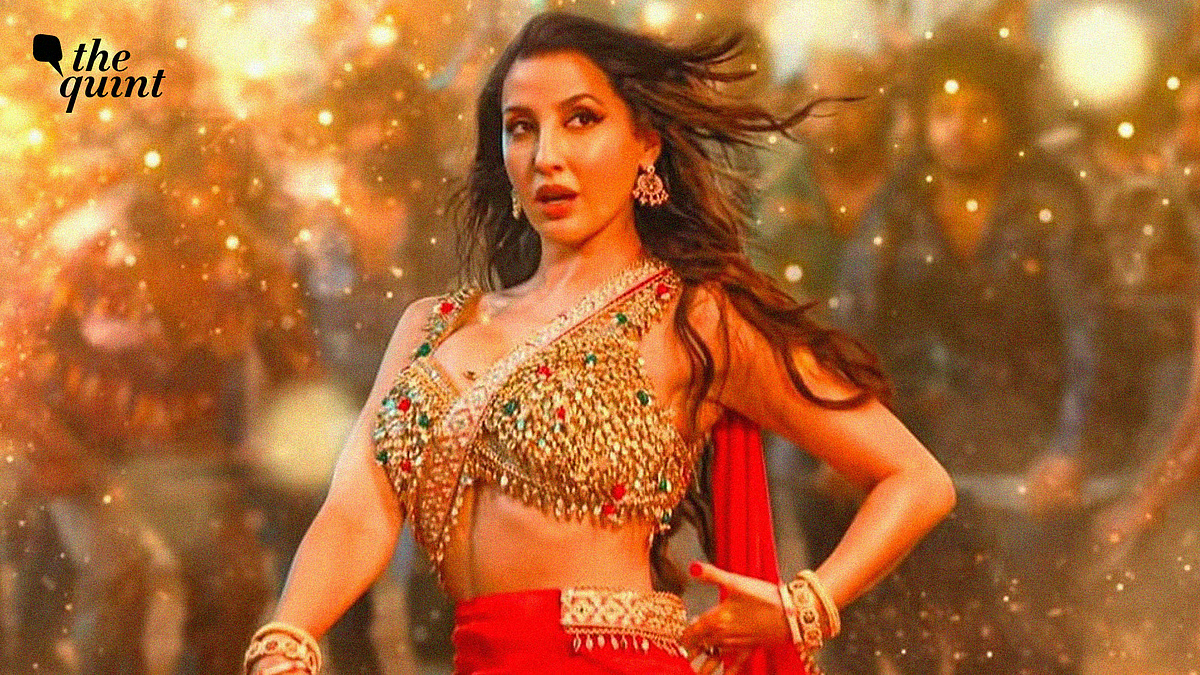
Within this framework, Fatehi’s own position becomes more complex. She is both a victim and a perpetrator of a rigged system. That is how patriarchal bargaining works—it gives you mileage as long as you are willing to be implicit in your own dehumanisation.
It is entirely plausible that Fatehi experienced a degree of exploitation in the creative process as she mentions in her video. Item numbers are rarely spaces of equal negotiation.
It would be naïve to ignore the possibility of calculated controversy. A song that trends for the wrong reasons is still getting the film air space. So, it is justified to wonder if the makers of KD: The Devil anticipate this media response. Perhaps it was their way to generate curiosity about a film that has clearly been stuck in production hell for a while. This would not be the first time a film has used provocation as marketing strategy. Which is one more reason why we should focus more on the asymmetry of accountability.
The “Choli Ke Peeche” (Khal Nayak, 1993) star Sanjay Dutt, who also appears in the song, has largely escaped scrutiny. This is despite a public history marked by misogynistic remarks, well-documented struggles with addiction, and a personal life that has often mirrored the dubious excesses his films romanticise.
This bias is a reflection of a broader patriarchal system film industries across India operate within. Creative authority in such instances remains overwhelmingly male. Decision-making power is concentrated, and with it, the ability to shape aesthetics as well as boundaries of acceptability. When controversy erupts, it is the most visible, and often the least powerful, participant who bears the brunt of the impact.
(The author is an independent film, TV and pop culture journalist who has been feeding into the great sucking maw of the internet since 2010. This is an opinion piece. The views expressed above are the author’s own. The Quint neither endorses nor is responsible for them.)