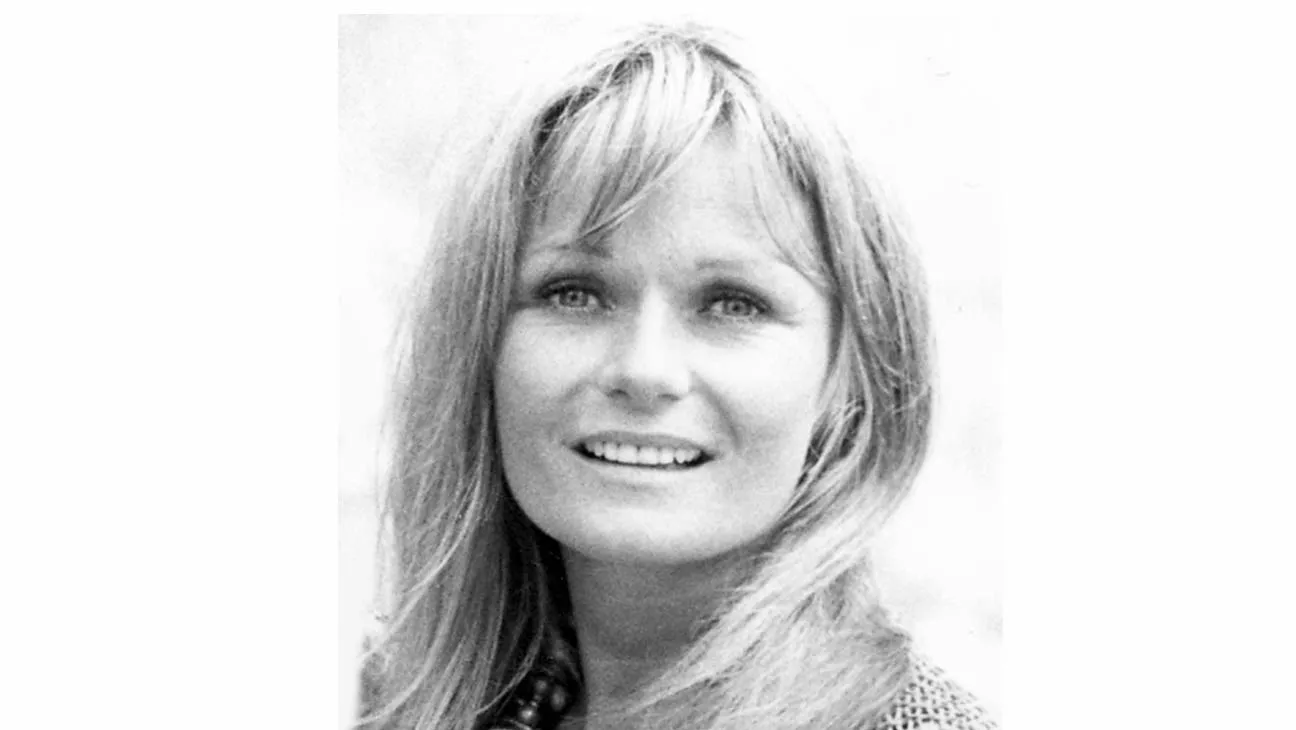
Valerie Perrine, the former Las Vegas showgirl who earned a best actress Oscar nomination for portraying Lenny Bruce’s drug-addicted stripper wife in Lenny and played Lex Luthor’s secretary in a pair of Superman films, died Monday. She was 82.
Perrine’s death was announced by friend and soulmate Stacey Souther. She was diagnosed in 2015 with Parkinson’s disease, which eventually robbed her of her mobility and much of her ability to eat and speak.
Souther cared for her for years, as Seth Abramovitch wrote about for The Hollywood Reporter in April 2023.
The actress did comedy and drama with equal fervor, also starring as the love interest of Jeff Bridges‘ NASCAR driver Junior Johnson in Lamont Johnson’s The Last American Hero (1973) and as the soon-to-be ex of champion rodeo rider Robert Redford‘s character in Sydney Pollack’s The Electric Horseman (1979).
Perrine, unfortunately, also starred with The Village People and Caitlyn Jenner in the lamentable disco-themed Can’t Stop the Music (1980), one of the two films that inspired the Worst Picture Golden Raspberry Award show (The Razzies).
“It ruined my career — I moved to Europe after, I was so embarrassed,” she said.
For playing Honey opposite Dustin Hoffman as the tormented 1960s stand-up legend in Lenny (1974), Perrine received the best actress award at the Cannes Film Festival, a BAFTA honor for most promising newcomer and then her Oscar nomination. (She lost out to Ellen Burstyn of Alice Doesn’t Live Here Anymore.)
In the Christopher Reeve-starring Superman (1978) and its 1980 sequel, Perrine’s seductive but soft-hearted Eve Teschmacher conspires with Luthor (Gene Hackman), but she ultimately rescues the Man of Steel from the villain’s trap in return for a promise that he will save her mother. In the second movie, she helps her bald-headed boss escape from jail.
Widely regarded as a sex symbol during a period of feminist backlash against sex symbols, Perrine was photographed several times for Playboy, and in the wake of Lenny’s release, The New York Times described her as “a sensual Betty Boop, with her cherubic blue eyes, button nose and rosebud lips.” (The piece was headlined “Valerie Perrine, or The Return of the Hollywood Sex Kitten.”)
In 1973, she had become the first woman whose breasts were intentionally exposed on television when she appeared in the PBS telefilm Steambath. She attributed her casting to her relaxed attitude about appearing topless, something she said she had cultivated onstage in Vegas and on the beaches of Europe.
Perrine was shown getting out of the shower and dropping her towel in the film, and her scene served as a popular fundraising tool for the nonprofit broadcaster.
Valerie Ritchie Perrine was born on Sept. 3, 1943, in Galveston, Texas. Her mother, Renee, was a dancer from Scotland, and her father, Kenneth, was a career military man who would retire from the U.S. Army as a lieutenant colonel.
She spent her childhood following her father’s military postings, which took the family to Japan, Paris and many stops in between.
“My father is and always has been a WASP only,” Perrine told the Times in the 1974 profile. “He’s a true American. Our family goes back to 1640 — we were on the second ship after the Mayflower. My closest friend in the whole wide world is Barry Goldwater’s daughter, Peggy, but the Goldwaters were the only Jewish people I was allowed to go around with — and they went to the Episcopal Church. I had to date boys from the country club. I went out with a garage mechanic once, and daddy went after him with a gun.”
She briefly studied psychology at the University of Arizona but dropped out to become a headlining Las Vegas showgirl. “Mother cried, Daddy swore,” she told People magazine of her decision. At one point, she was making $800 a week as the lead dancer in a Lido de Paris show at the Stardust Hotel.
The accidental death of her fiancé, Bill Haarman — an importer and gun collector who lived in Beverly Hills, he was killed in January 1969 when a pistol tucked in his waistband fell to the floor and fired a bullet, which ricocheted off a door and into his heart — left Perrine devastated and led her to leave Vegas, and she traveled throughout Europe for a time.
She then had a fling with hairdresser Jay Sebring, but he would be murdered by Charles Manson followers in the home of Sharon Tate in August that year. (Perrine had been invited to the house that day but had to work instead.)
Her natural charisma eventually caught the attention of casting agent Robert Walker at a dinner party. After eavesdropping on her lively phone call to her boyfriend, Walker inquired if she had any acting experience.
In a 2013 interview with screenwriter Larry Karaszewski, Perrine said, “He asked if I had ever acted, and I said no. He asked me if I could, and I said yes. He asked me if I had a picture, and the only picture I had was me as a topless showgirl in Vegas in a little G-string.”
Once Monique James, then the head of new talent at Universal, saw the revealing photo, she invited her to screen test for the role of soft-core pornography actress Montana Wildhack in Slaughterhouse-Five (1972), directed by George Roy Hill.
“They told me to wear a bikini because they wanted to see what my body looked like. … I didn’t have a bikini, so I wore my Vegas costume,” she recalled. Despite an audition that she described as so awful that James claimed to have burned the tape, Perrine got the part.
Though she never met Slaughterhouse-Five author Kurt Vonnegut during the filming of the movie, she later ran into him at Elaine’s while living in New York, and he told her he approved of the adaptation.
Having never taken acting lessons, Perrine said her success came from just trying to be real. “I don’t really know what I do. I don’t think about anything until I get on the set. I just learn my lines, period,” she said. “Then when I’m on the set, I think of something that has happened to me in the past — like in that crying scene with Dustin in Lenny, I thought of an old boyfriend who had hurt me, and — that really did it.”
While working on the movie, Hoffman confided to Perrine that he hated when people mistook him for Al Pacino or Robert De Niro.
On set in a large restaurant in Miami, Perrine noticed that “all of these tourists and retirees were watching and passionately in love with Dustin.” When she exited the stage, she told the crowd, “When Dustin comes out, I want you people over here on the left to all yell, ‘Bobby De Niro,’ and on the other side, I got them to yell, ‘Al Pacino.’ And by God, every one of them did it.”
When Hoffman came out and heard the crowd, he threw down his script yelled, “Where the fuck is Valerie?”
She later starred with Rod Steiger in W.C. Fields and Me (1976) as Fields’ mistress Carlotta Monti; she later called it her worst experience on a film set. “[Steiger] was just not a happy man, he was full of hate for everything,” she told Karaszewski.
On the other hand, she referred to Michael Caine, her co-star in the comedy Water (1985), as “the nicest human being I’ve ever worked with.”
She pinpointed the moment she knew the Alan Carr-scripted Can’t Stop the Music would fail to being scolded by first-time feature director Nancy Walker — better known for playing the mother of TV’s Rhoda Morgenstern — before a scene with Jenner, who had won an Olympic gold medal at the 1976 Summer Games in Montreal.
Perrine was trying to help Jenner, an acting novice, relax before they started filming, when “all of a sudden, I heard Nancy yell out for ruining the set because I was talking during a tape — and she was looking the wrong direction and didn’t know the camera was on me.”
Perrine also appeared with Alan Arkin in The Magician of Lublin (1979) and with Jack Nicholson in The Border (1982), and she played a vapid office assistant in the Mel Gibson starrer What Women Want (2000). She continued taking guest roles on television until she reduced her workload in the early 2000s because of declining health.
But it was the Superman movies for which she would always best be remembered, and throughout her life she was greeted by fans with a bellow — à la Lex Luthor — “Miss Teschmacher!”
After having battled essential tremors for more than a decade, she was diagnosed with Parkinson’s. She underwent treatments including brain surgery to help stop the shaking, with limited success.
In 2017, she had dental surgery after medications made her teeth brittle to the point of falling out. The procedure was funded by Smile Fairies, a nonprofit that provides dental care for those who can’t afford it.
Perrine was romantically linked to a number of men through the years, including Bridges when they worked on Last American Hero, Elliott Gould and Dodi Faye, but she never married or had children. Survivors include her brother, Kenneth.
Deirdre Durkan contributed to this report.