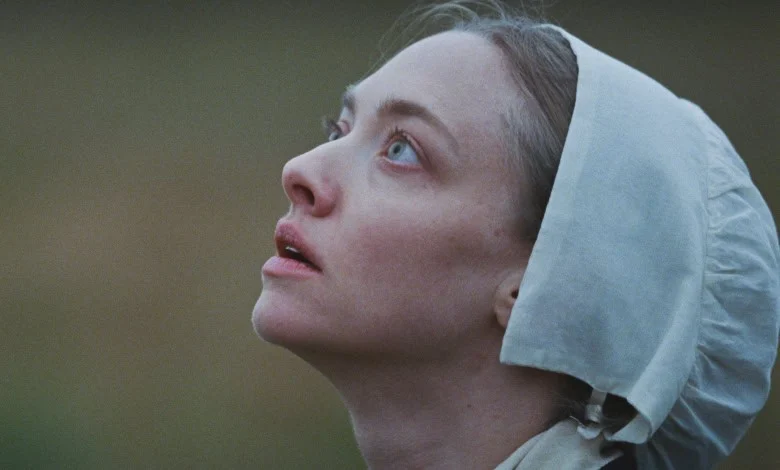
Mona Fastvold’s “The Testament of Ann Lee” is a history lesson on the creation of the Shaker religious movement, and a period drama/musical on the level with Ken Russell’s most out-there works.
Take that as a warning.
Here’s another – the first 25 minutes will root out those who won’t put up with something this challenging.
It’s written by Fastvold and Brady Corbett, whose prior film, “The Brutalist” (2024), became a critic favorite last year. (I liked “The Brutalist” but, tellingly, I have yet to meet anyone willing to watch it twice.)
“The Testament of Ann Lee” begins in 1736 and depicts the title character’s painful journey as she discovers the Shaker movement and finds a profound connection.
Thomasin McKenzie (so good here and in Edgar Wright’s “Last Night in SOHO”) provides the narration, informing us that “true religion comes from inward experience.” Also, we learn that the Shakers are called that because “shaking and dancing characterized this worship.”
Like “Equus” (both the stage play and the 1977 Sidney Lumet film), this depicts how a steady stream of religious imagery, and a sharp contrast to it, creates an inner disturbance. Fastvold’s film isn’t anti-religious, but it deals seriously with the difference between personal faith and religious organizations.
There are some lulls, and it’s harder to take than necessary (there’s imagery in the first half strong enough to make the most hardened horror movie fan swear off their popcorn). Yet, Fastvold doesn’t linger on the brutality and shows only enough to make us wince before mercifully cutting away.
Amanda Seyfried cries as ‘The Testament of Ann Lee’ scores 15-minute Venice standing ovationhttps://t.co/CyUW8NC8vX pic.twitter.com/Uo1kBh348z
— Variety (@Variety) September 1, 2025
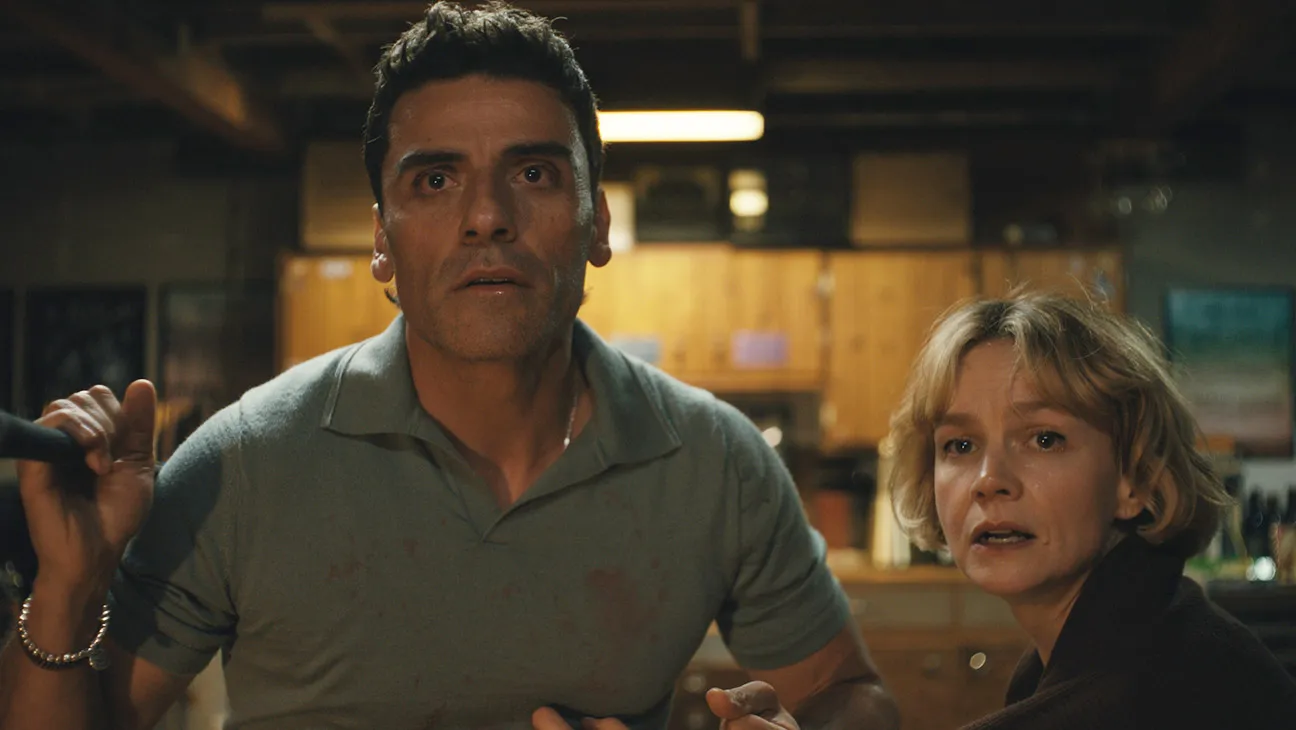
At its best, the film matches the fire and fearlessness of Amanda Seyfried’s lead performance. I respond strongly to a film like “The Testament of Ann Lee” for three big reasons:
- I couldn’t guess where it was going and was never able to get ahead of it.
- There is a what, me-worry attitude here regarding the blending of genres (the religious history lesson and movie musical)
- Fastvold and her cast push this far enough without it capsizing over the top or becoming unbearable.
No question, the early portion and a violent sequence near the end will push some buttons but overall, the film dazzles the senses as much as the imagination. Like the works of Julie Taymor, the whole thing is bold and nutty, but I’d prefer something this brazen over a straightforward historical biopic.
Like “Dancer in the Dark” (2000), it’s not interested in the musical genre as escapism but as an emotional immersion, means of expression for cracked personalities and a discomforting experience. The last time I reviewed a film like this, for this very site, it was “Joker: Folie à Deux” (2024), which I also loved.
Yes, loved.
Adventurous filmgoers who want an entirely new experience while watching a movie musical, look no further. For everyone else, maybe “Wicked: For Good” is still playing in your neighborhood theater.
Three and a half stars (out of four)
The post ‘Testament of Ann Lee’ is Cinematic Test Worth Taking appeared first on Hollywood in Toto.