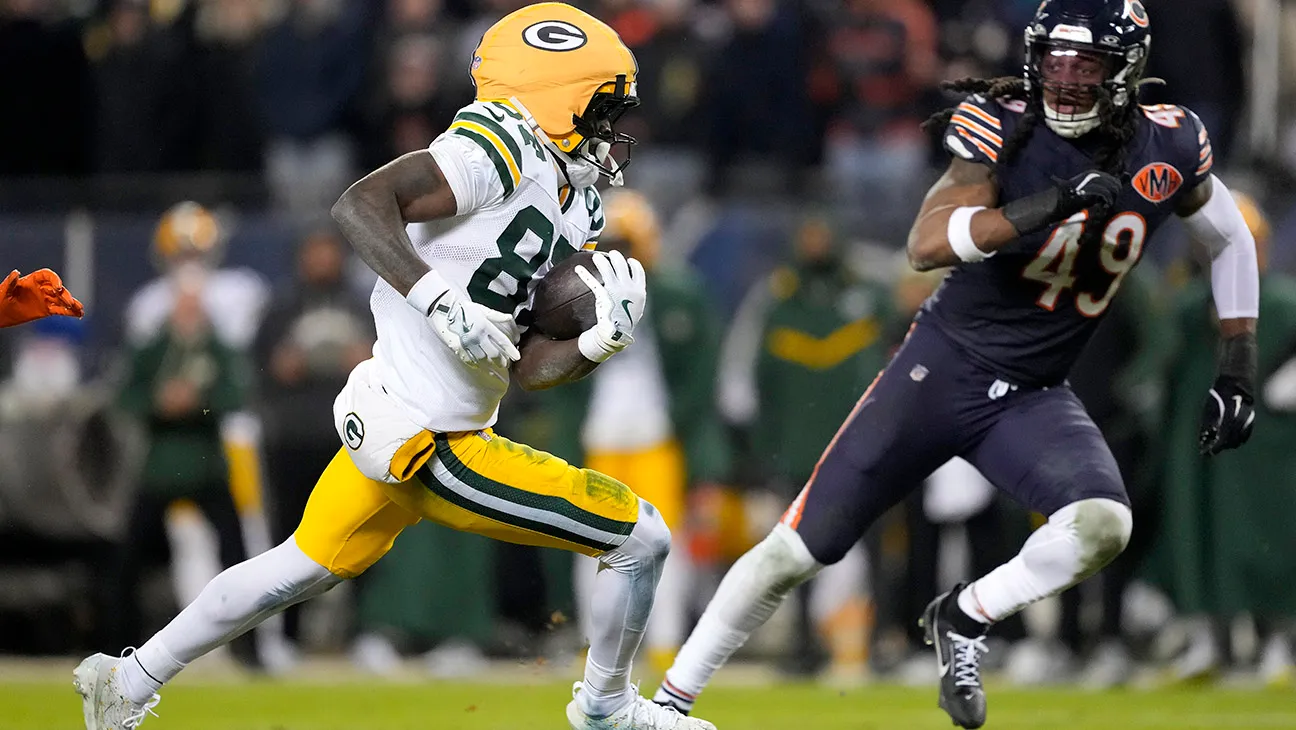
The Trump administration appears to be launching a full-throated investigation into the most valuable programming in all of television: Games from the National Football League.
Earlier this year the Federal Communications Commission opened a public notice review into the sports broadcasting marketplace, sparked by concerns that more and more sports are leaving broadcast TV and putting their games exclusively on streaming platforms.
And Thursday The Wall Street Journal reported that the Department of Justice is investigating the NFL over whether it is engaged in anticompetitive tactics related to its broadcast deals.
The FCC and DOJ investigations could have real-world implications for the league and its media partners, which include companies with broadcast networks like Paramount, Fox and NBCUniversal, and partners like Amazon, Disney and Netflix, which have largely used live sports as a subscription driver (Disney does put some games on ABC, while Fox, Paramount and NBC simulcast games on their streaming services).
“The NFL’s media distribution model is the most fan and broadcaster-friendly in the entire sports and entertainment industry,” an NFL spokesperson tells The Hollywood Reporter. “With over 87% of our games on free, broadcast television, including 100% of games in the markets of the competing teams, the NFL has for decades put our fans front and center in how we distribute our content. The 2025 season was our most viewed since 1989 and reflects the strength of the NFL distribution model and its wide availability to all fans.”
The NFL is currently renegotiating its TV deal with Paramount (taking advantage of a change-in-control clause connected to the sale to Skydance), seeking a significant rights fee increase. That deal is seen as a bellwether, which could set the bar for negotiations with other media partners in the coming months.
But left unsaid in the government investigations is that not every media partner would face an equal impact. Paramount and Fox, which hold the Sunday afternoon windows and broadcast more games on local stations than any other partner, could benefit from the outcome of any investigation or interpretation of the Sports Broadcasting Act, which provides a limited antitrust exemption to the league.
Companies like Amazon, Netflix and Disney may face new pressure given their subscription focus, though as the NFL notes, all of its games, even those on streaming, still air on local stations in the markets of its teams.
Fox and Paramount, of course, are perceived as having leadership that is friendlier to the administration, in contrast with the tech companies and Disney.
And Fox has also made its thoughts known in a little-noticed filing with the FCC.
“As leagues place more content on less-regulated, paid streaming platforms, however, and as customer costs increase, both the legal basis and public-policy rationale behind this antitrust exemption are appropriate to examine,” Fox wrote in the filing, connecting the future of live sports on broadcast TV to the future of local news writ large.
“Local TV should not share local newspapers’ fate,” Fox added. “As the Commission continues its advocacy in this area, it should consider how critical live sports are to ensuring that TV stations keep the best local journalists on the beat.”
And the NFL, many analysts agree, is existential to companies like Fox and Paramount, given the importance of the programming to their TV lineups, their advertising revenue, and their streaming ambitions, which are focused on consumers that don’t have pay-TV subscriptions.
But more significantly, pure-play media companies don’t have the economic firepower of the big tech giants. Given the NFL’s notoriously limited supply of games, and its willingness to carve out new windows to maximize its revenues, that may be the sticking point in the talks, and the government investigations.
“Streaming services, dominated by less regulated Big Tech, increasingly compete head-to-head with broadcasters for the right to air professional sports games,” Fox wrote in its FCC filing. “In other words, there is increased demand for a fixed supply—with the new market entrants being some of the world’s most profitable companies. Broadcasters are forced to pay more for the rights to games, or they are cut off entirely from essential programming that sustains live local news and helps broadcasters continue to meet their public interest obligations.”
But the big loser may be Hollywood. As THR previously reported, if and when the NFL does renegotiate its media deals, the result will be fewer dollars flowing to the entertainment business, in favor of more flowing into the league’s coffers.
Bank of America analyst Jessica Reif Ehrlich wrote Feb. 25 that the renegotiations are “potentially ominous for traditional media’s long-term trajectory,” as “premium sports become a larger cost, while the legacy monetization base continues to structurally weaken and streaming has yet to prove that it can fill the gap of lost linear economics.”
“At least you know your economics with sports, you can make a decision as to whether they’re good economics, but you know what you’re getting,” added a veteran media executive. “Do I have to do Game of Thrones? Do I have to do The Crown? The answer is, ‘Yeah, I may do a Crown, but I may not do something else.’ The aggregate will be less scripted and I think fewer high-end series made.”