From the age of nine, I dreamed of being the Stan Lee of my own comic company.
The Hard Knock Academy did what it could to crush that dream, and it almost succeeded. But the flame would just not quit smoldering.
In 2010, I self-published my first novel. In time, that grew into a trilogy and all three books would go on to become #1 bestsellers in multiple Amazon categories. I enjoyed more modest success as a prose author, but I never gave up on the sequential art medium—at least as a fan.
In the midst of the Covidiocy lockdowns, that old comic book flame reignited. I still remembered most of the characters I conceived, and an idea for a sprawling superhero epic that I never began.
youtube.com/watch?v=VZyB1qpo1Cw&feature=youtu.be
Over the years, when driving long distances or performing monotonous tasks, the old ideas bubbled up to the surface of my mind. In my daydreams I had revised scenes, plot elements and character concepts.
Not because I always believed I’d be able to use them, but because there’s a creative algorithm in the firmware of my brain I’ve never been able to turn off.
I got a fire lit under me in 2021 and first attempted to create a space opera comic. That’s a story unto itself I won’t unpack here. But despite how disgusted I was with the Big Two comic book companies and the disappointing cinematic adaptations of late, I still wanted to revisit the stories that had evolved through the years in my imagination.
As a boy, my intention was mostly just to concoct a tremendous super-slugfest. I had the last issue of the Korvac Saga in my collection and was impressed by the heroism of Earth’s (Marvel’s) mightiest heroes standing together against world-destroying power with a forlorn hope of survival…but fighting anyway because they saw it as the right thing to do.
In retrospect, the Korvac Saga is arguably a silly continuity built on a foundation of contrivances and poorly-realized plot devices, but there was something about that final battle that really impressed me as a young boy.
I wanted to explore whatever it was.
The success of the Gerard Butler film “300” decades later showed me that I wasn’t the only one who liked that trope of the (relatively) small band of brothers standing together against impossible odds.
However, I eventually came to find potential reasons for such a quixotic last stand even more interesting than the battle itself.
My experience and observations of the world around me filled in those blanks. What could inspire actual heroes to fight such a battle? That’s easy: freedom.
It rhymes with the scenario we are facing in Current Year America. There are people near the reins of power who think good governance is:
- Sending agents to murder a pet squirrel or investigate a garage pull-down cord
- Arresting citizens for sharing memes or for praying near an abortion clinic
- Holding church service or walking their dog outdoors during a universal lockdown for a flu bug with a 99 percent survival rate
The enemy is too cowardly to overtly fight to deprive us of our individual rights—they would take our freedoms through deception, subterfuge, psychological manipulation, lawfare and fraud. They’ll try to avoid an actual fight until we’re helpless to resist.
Patrick Henry’s axiom, “Give me liberty or give me death,” is more relevant than ever.
What if there was a subculture that agreed with Henry, but could not be made helpless? Who would force their would-be masters to fight it out? That is a hill good men would be willing to die on.
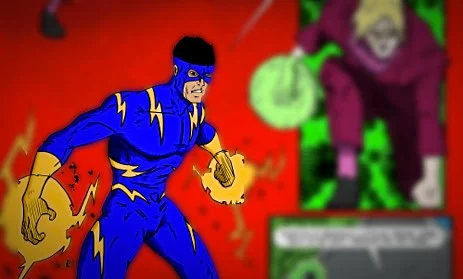
I transposed the old story idea from my childhood world into the reality of 2021-ish, then tweaked that to accommodate the existence of superheroes and clear plenty of wiggle-room for creative license. The plot involves an international conspiracy to establish Orwellian control over the citizens of every country; a super-powered (“ultrahuman”) team to enforce compliance; and a resistance movement with a team of ultrahuman dissidents that comes together to oppose them.
I’m calling it “Tales of the Earthbound.”
The first graphic novel in the series, “Threat Quotient” (so named due to how ultrahumans are classified by the government according to how much damage they can cause), would introduce most of the heroes on both sides as they head for a showdown—the first battle in a struggle to determine the fate of the world.
I had written a couple of scripts by the time I started seeking an artist for them. Initially I sought somebody willing to collaborate and split the profits after we had completed a graphic novel and sold it. Amazingly, two illustrators showed early interest.
Both looked promising. Long story short: each left the project before a single panel was drawn. I wasn’t able to find another artist open to a collaborative deal. I would have to pay for the art out of my shallow pocket.
In my financial situation at the time, big sacrifices would have to be made to pay an illustrator’s rate for a 100+ page project. I just had to find an artist who was dependable and willing to draw what I paid them to draw.
Thus began a long, demoralizing dark comedy.
But a few years later, I have 108 inked pages, and I’ve been able to color and letter about 70 percent of them in my spare time, so far.
I’ve got campaigns for “Threat Quotient” at FundMyComic, available now, and April 28 on Kickstarter.
Crowdfunding is a way for independent creators to outflank the gatekeepers and bypass most of the considerable obstacles between us and the comics audience. It also provides a way for you to help decide if there will be an alternative.
If you like what you see, let’s make this happen.
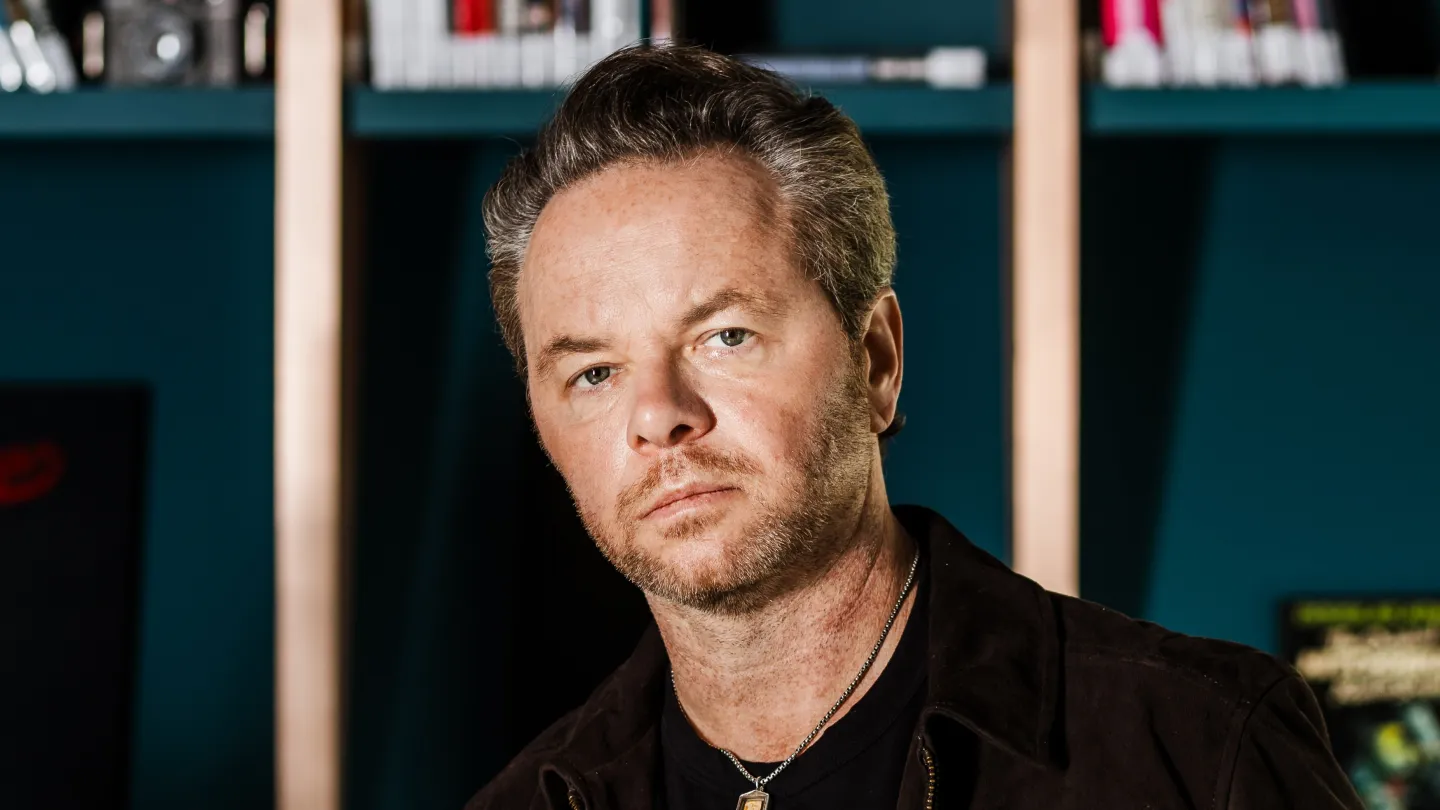
Henry Brown volunteered for the Airborne Infantry and shipped off to see the world straight out of high school, returning to civilian life years later a changed man with a changed outlook and a desire to do something creative for a living. He became an author in 2010, has written nine novels and shorter fiction in various genres, and now is breaking into comics.