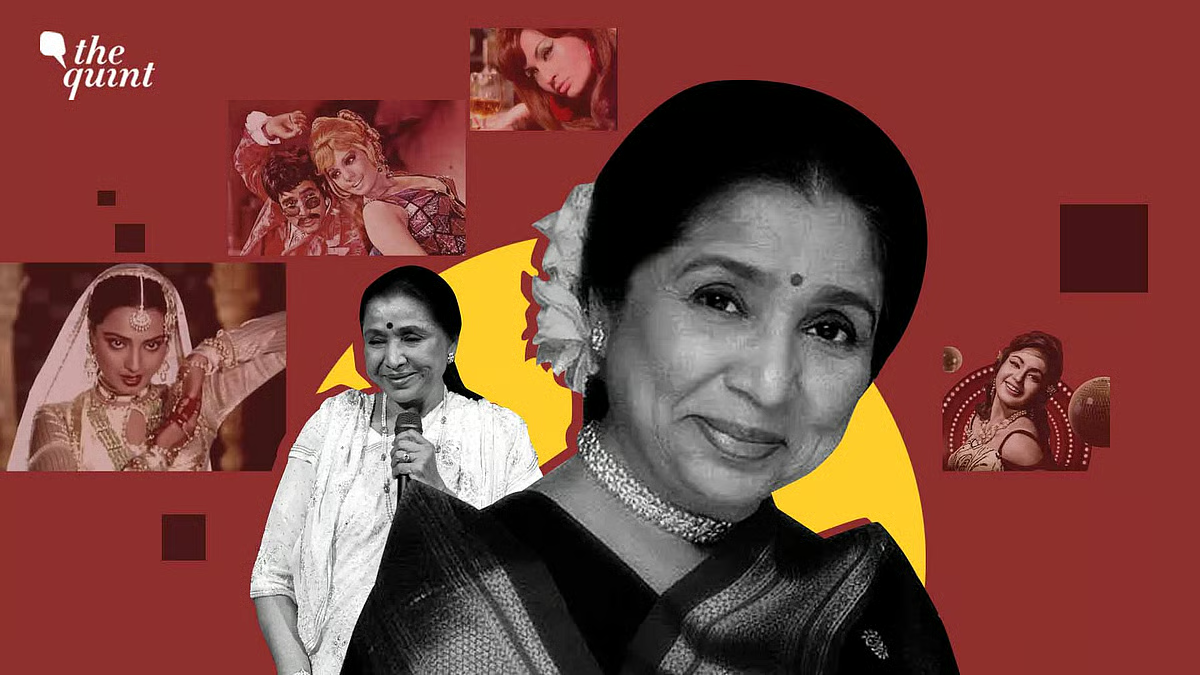
Every time she sang a seductive number, Asha Bhosle showed us that “vulgarity”, like beauty, is subjective. Her songs were never vulgar; they were always true to the situation and the character.
From Mera Naam Shabnam Hai (Kati Patang, 1970) to Raat Akeli Hai (Jewel Thief, 1967), and O Babua Yeh Mahua (Sadma, 1983), she brought nuance, playfulness, and control.
In 1996, after RD Burman’s death in 1994, she teamed up with Leslie Lewis to remix popular Pancham numbers like O Mere Sona Re for Rahul and I, while continuing to work with newer composers. When Ram Gopal Verma set out to re-launch Urmila Matondkar, he and AR Rahman chose Asha tai for Rangeela (1995). She sang with such ferocity that you believed every word —“Chal mere sang-sang… ho ja rangeela re”— enthralling yet another generation as we neared the turn of the millennium.
Her range remains staggering. She moved effortlessly across genres—ghazals like Dil Cheez Kya Hai (Umrao Jaan, 1981), semi-classical gems like Piya Baanwari (Khubsoorat, 1980), bhajans like Tora Mann Darpan Kehlaye (Kaajal, 1965), and qawwalis like Na Toh Karwaan Ki Talaash Hai (Barsaat Ki Raat, 1960).
Her non-film work, in India and abroad, is equally celebrated—from Dil Padosi Hai (1987), with RD Burman and Gulzar, to her 2005 tribute to ghazal greats like Mehdi Hassan and Jagjit Singh. Her Grammy nominations—for Legacy (1997), with Ustad Ali Akbar Khan, and You’ve Stolen My Heart (2005), with the Kronos Quartet—came late, but fittingly. Not that she ever complained.