Michael Anderson’s “Logan’s Run” (1976) is now 50 years old.
Based on the 1967 novel by William F. Nolan and George Clayton, it depicts an idealized and controlled society, which is eventually recognized as a widescale menace the citizens are in need of escaping.
Set in the year 2274, it presents an idealized society where the catch is mandated death at the age of 30 by public execution, which citizens attend like a New Year’s Eve party. The look of this world is uncannily similar to Epcot Center in the Florida leg of Disneyworld, with the interiors resembling a vast shopping mall.
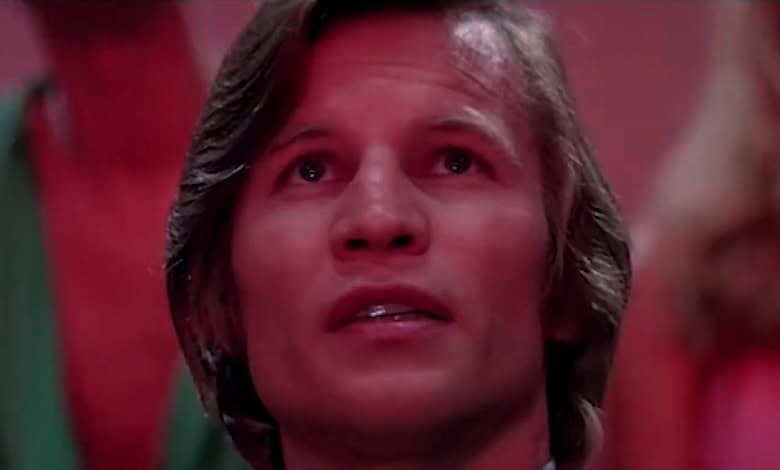
The focus is Logan, played by Michael York, one of the “sandman” law enforcers who terminate anyone who rebels against the system. Sandman’s colleague and best friend, played by Richard Jordan, enjoys the decadence of their world and submits to the youthful hedonism and the casual sadism in the public executions of those deemed too old to live.
RELATED:
SCI-FI SCRIBE REJECTS DANGEROUS GROUPTHINK
27 MOVIES THAT MADE US WANT TO STUDY SCIENCE
When the system turns on Logan, as it does for John Anderton in the similar “Minority Report” (2002), Logan basically takes Anderton’s two-word advice: Everybody Runs.
On the glittery surface, this sci-fi hit is very of its time but, even at its silliest (arguably the snow-crusted scene that bridges the second and third acts), “Logan’s Run” never lacks spectacle and, more importantly, rich ideas.
Anderson’s film is among the many futurist dramas with actors in jumpsuits, obvious special effects and a tendency to be campy. “Logan’s Run” is no different in that respect, as the crowd scenes resemble a ’70s-themed costume party.
However, the third act is so smart and surprising, it elevates everything that came before it and manages to keep this soaring until the end.
“Logan’s Run” spawned a TV series, which ran for a mere six months in 1977-1978, as well as a Marvel Comics series and countless films “inspired” by it.
Made in the age of “Buck Rogers” but arriving a year before “Star Wars” (1977), the DNA of “Logan’s Run” is obviously present in “The Hunger Games” (2012), “Minority Report” (2002), “Total Recall” (1990), “Voyagers” (2021), “Demolition Man” (1993) and the obvious rip-off, “The Island” (2005), the latter of which is also the best film Michael Bay has ever made.
The old-school spectacle is bountiful, with models, optical illusions, striking sets and old-fashioned wizardry that often are easy to spot but not always. The echoey bleep-bloops on the soundtrack are silly, especially when Jerry Goldsmith is on hand and provides a typically muscular score.
By the time Peter Ustinov shows up and starts quoting T.S. Elliot’s “Book of Practical Cats,” the ideas are still building and even richer in the late going. Like the closer of “Planet of the Apes” (1968), the great third act reveal here brings greater depth to the central drama and crystalizes the themes of empowering personal freedom and open mindedness in a controlling society.
The first words spoken in the movie Logan’s Run (1976) are “Wake up.” It’s interesting how much science fiction was trying to warn us. pic.twitter.com/IrSkZVAbri
— Chris Gore (@ThatChrisGore) February 18, 2023
York, post-“Romeo & Juliet” (1968), is a commanding presence but his character is unappealing. Jenny Agutter’s rebel is the heart of the story and Jordan’s performance is the film’s best. Farrah Fawcett’s big scene winds up being a showstopper. Overall, the film never runs out of arresting visuals, worthwhile themes and nutty set pieces.
This weird, trippy and fascinating sci-fi parable can be interpreted as portraying the physical and psychological struggle that goes into escaping a cult, as well as a meditation on age-obsessed society, run by computers and ruled by groupthink.
Thank God that doesn’t sound relevant to the world we live in today!