Marie Clémentine Dusabejambo’s Ben’Imana follows a survivor who leads her community toward reconciliation — but doesn’t extend that grace to her daughter
Marie Clémentine Dusabejambo undertook extensive research, over about a decade, for her first feature film, Ben’Imana — a nuanced look at the aftermath of the Rwandan genocide, told from the perspective of women involved in community reconciliation projects and conversations. Dusabejambo listened to harrowing stories from survivors and heard brutal confessions from regretful perpetrators. Initially, she kept crying — this was her community, too, after all, with real wounds unhealed. Then she realized: “They’re not crying when they’re telling me this. Why am I crying?”
That kind of hard-earned wisdom is all over Ben’Imana. In her 20s, Dusabejambo was planning on attending university for electronics and telecommunications before taking a callout for new filmmakers. She fell hard for the language of cinema and quickly knew that she wanted to make her own movie about the legacy of the genocide, which she grew up in. Her first short followed two students, one of whose parents was killed during that period. “At that time I didn’t have knowledge of the weight of what happened during and after the genocide,” she says. “But that led to this film.”
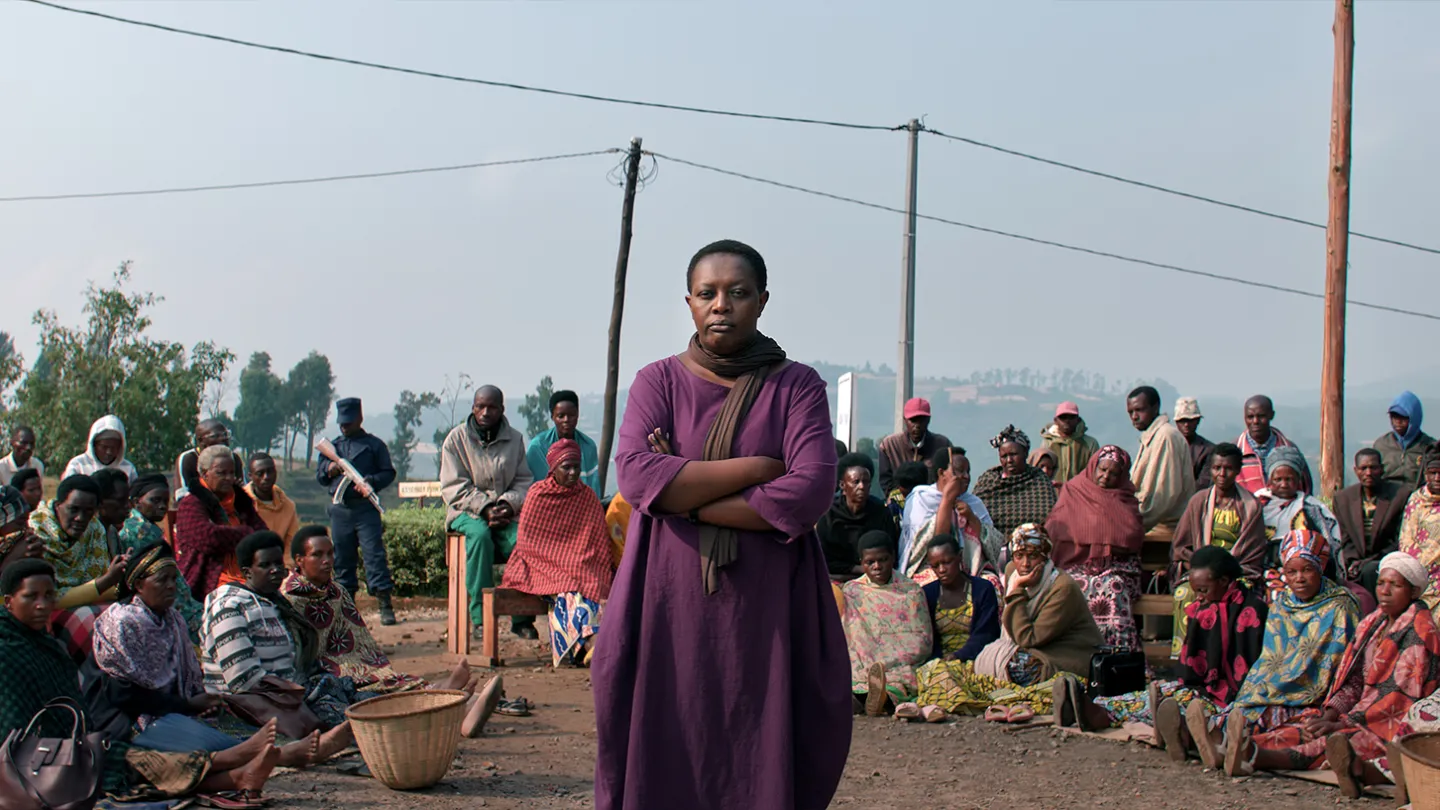
The crux of Ben’Imana explores the relationship between Vénéranda (Clémentine U. Nyirinkindi), a survivor who leads community recovery efforts, and her teenage daughter, who’s newly, unexpectedly pregnant. This causes a rift between the two women — clashes of tradition versus modernity, evolving gender roles, and most centrally for the topic of this movie, forgiveness. We watch Vénéranda cruelly scold her daughter in the same breath that she empathically urges women reeling from very dark choices to forgive themselves.
These themes emerged out of conversations Dusabejambo had with these actual women, traumatized and/or guilty, before casting them in the film despite no acting experience. “They bring in something that is real,” the filmmaker says. Because of the depth of her knowledge of their stories and psyches, she could guide their scenes accordingly: “I was also trying to find their language: How do they talk about themselves? How do they talk about this history without being too reductive?”
That reflects the larger achievement of Ben’Imana: The film carries across a very specific, melancholy, but warm point of view. Dusabejambo knows that having a Rwandan film centered almost entirely on women felt novel on its own, but she was never satisfied with that as a differentiator. “The place women have in Rwanda is one of influence and power that is indirect, but it’s a matriarchal society — and there are women who participated in the killings,” she says. “In this mothering space where we all met, I wanted to go through the women’s hearts and find the heartbeat.”
That collective spirit extended behind the camera, too.
Says Dusabejambo: “It’s a small community. We have been working together for a long time in the film industry in Rwanda. We coexist in collectivity.”