[This article contains major spoilers from the series finale of Imperfect Women.]
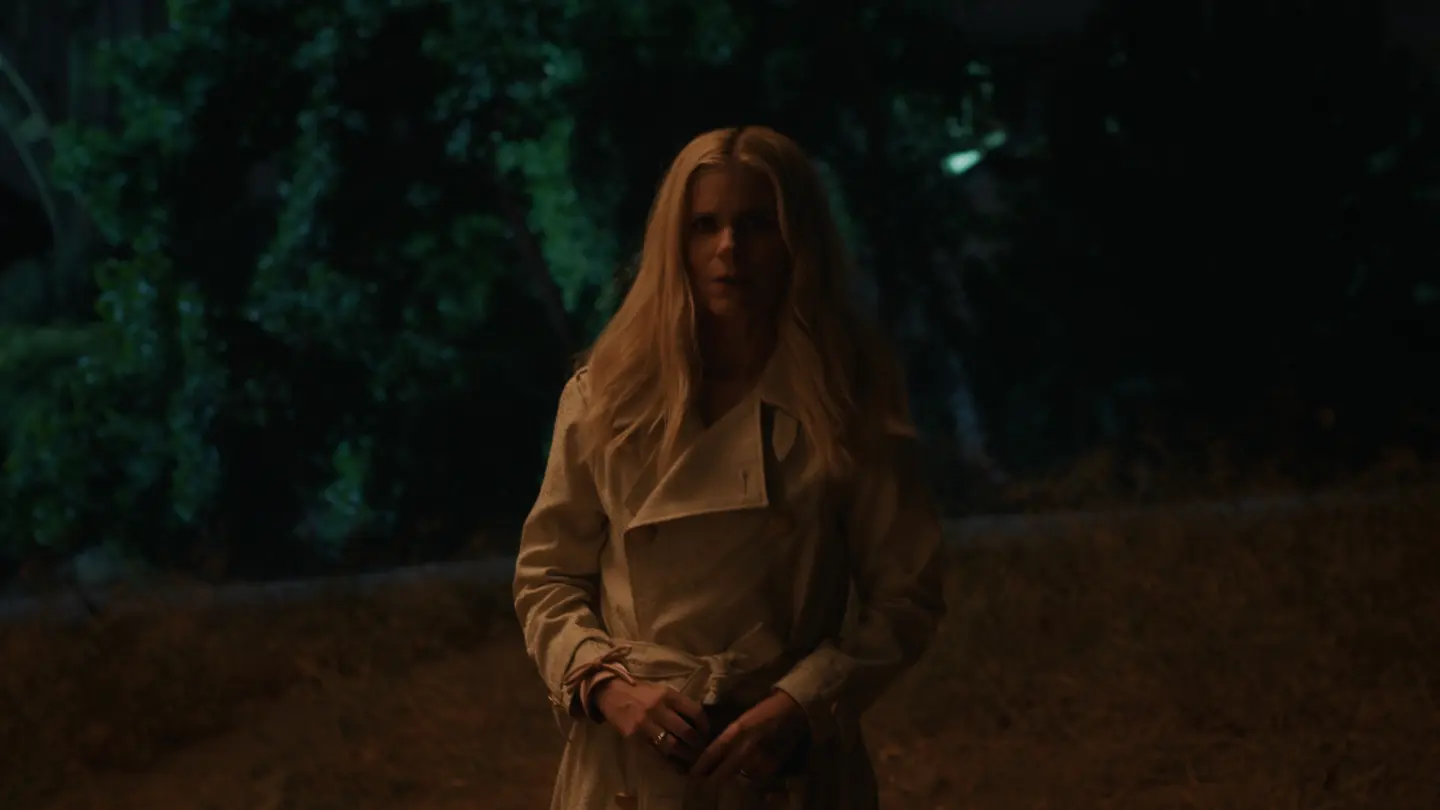
The whodunnit at the center of Imperfect Women — since Kate Mara’s Nancy was murdered in episode one — has finally been answered in the thriller’s series finale.
And Mary (Elisabeth Moss) was right.
Howard (Corey Stoll), the stay-at-home mom’s gaslighting husband whose once-distant relationship with Nancy turned inappropriately personal when the two began working together on a theater production, killed Nancy hours after she met up with Mary and Eleanor (Kerry Washington) for drinks in the series premiere, and told the latter friend she’d break things off with her then-unknown lover later that night.
That plan doesn’t pan out quite as easily as Nancy expected, however. Instead of a mutual parting of ways, Howard professes his love for Nancy and proposes that the two be together. She rejects the idea and, upon relaying her desire to confess to Mary, Howard returns Nancy’s slap at the insinuation that she doesn’t care about her best friend with a deadly push into a cement wall that instantly kills her on impact.
The long-awaited revelation comes after eight episodes of nearly every associate of Nancy’s coming under suspicion, from her husband Robert (Joel Kinnaman) and her painter friend David (Theo Bongani Ndyalvane) to her mother’s abusive ex-boyfriend Scott (Wilson Bethel) and even her two closest friends.
“The fun of it is not knowing,” show creator Annie Weisman, who adapted the Apple TV series from Araminta Hall’s 2020 novel of the same name, tells The Hollywood Reporter, adding that the shifting points of view of each episode added to the overall mystery and anticipation of finding out who killed Nancy. “It’s the fun of really being in what feels like an objective point of view, and then suddenly you realize in the switching that it was not at all objective — everything is suspect.”
Below, Weisman talks with THR about the difficult conversations in the writers’ room about presenting the interracial friend group onscreen, considering an alternative killer and the message the series sends about the danger shame and secrets pose to women.
***
In the series, viewers get quite a bit of detail about Nancy’s current and past life, and to a lesser extent, Eleanor’s. What backstory, if any, did you create about Mary and how she came to be friends with these women? She feels a bit like the financial and professional outlier of the group.
We loved the idea of them meeting in college, because it’s such a time when you can really find people outside of the other ways that we group together in adult life. It’s a time of reinvention and experimentation for a lot of people. So the idea was that each of these characters is somewhat of an outlier in their family of origin. They each found each other in college, and then get into adult life, and things change and they go on different tracks. That bond is still there, but it gets tested. With Mary, it was fun to think about when we meet her.
She’s in the middle of heavy-duty, three-kid parenting in a really absorbed way. I was inspired by this conversation I had with a really good, very old friend of mine, who called me in the middle of the day once. She was in the parking lot of a supermarket in tears like, “I just caught the eye of this woman looking at me, and I could see her dismissing me as this frumpy mom buying bargain cereal. She doesn’t know who I am inside. I’m not who that person sees.” And it was really moving because a lot of us feel that way in the difficult squeeze of our lives, in caregiving and in whatever that looks like for you. I thought, “Oh, this is the value of this longtime friendship.”
We really wanted to put that into the show — that the people you’ve known for decades are the ones who know who you are inside. Mary is that person inside. She has a fiery, imaginative life that hasn’t gotten expressed in a while because she’s in this abusive marriage — she’s in the teeth of caregiving and she needs her friends to remember that part of herself.
With Eleanor, we get a bit more understanding about why she is the way she is through her dynamic with her mom in the finale. Is that a big departure from the book?
It was. She’s someone who really went away from home and reinvented herself. And in this moment of crisis, there’s a pull, a drawback to healing that primary bond and that home. It was something that really was built in the writers room and in conversation with Kerry: what does she come from? What is that relationship? We talked about a lot of different versions of it in our writers room and we landed on, collectively, this idea of reconnecting with mom. Then Kay Oyegun wrote that beautiful scene between her and her mom, and it felt like a grounding and a coming home for that character.
How’d you get Sheryl Lee Ralph to play the mother?
That’s the joy of working with Kerry Washington. Kay Oyegun, who wrote that scene and a lot of the show, is younger than I am. I’m obsessed with Sheryl Lee Ralph as a Broadway legend, as the original dream girl. But Kay is like, “That’s Moesha’s mom. And therefore, that’s my mom.” It’s that bond of television from your childhood. She really felt connected to her, and then Kerry’s like, “I’ll give her a call.” Then [Sheryl’s] like, “Sure.” That was really cool.
We had three Black writers on the show, all with completely different backgrounds and perspectives, and it was me doing a lot of listening about origin and identity and there was no monolithic idea about Black identity and Kerry’s background.
I imagine Eleanor isn’t Black in the original text. How did you and the writers decide you wanted to deal with race?
She wasn’t. And when I was making the story American, the hallmark of it is this is a friendship that crosses different lines, that they meet in college and they’re from different class backgrounds. In England, the conversation is so much about class. In America, you can’t talk about class without talking about race. I studied in England for a year and it made me understand my Americanness more, so in making [the series] American, it felt like an opportunity if we’re going to talk about difference, let’s talk about race too. And if we were going to do that, we wanted to have some of the more difficult conversations about what it really means to have an interracial friendship between women and not pretend like on TV.
Sometimes they pretend like it’s just easy-breezy and it doesn’t get complicated. It does. And we had some of those conversations and it was really cool. I’m not going to pretend like there isn’t friction because there is. And I stepped in it sometimes, and I got checked on things and the characters do too. We tried to be honest about that.

Corey Stoll and Elisabeth Moss in Imperfect Women.
Apple TV+
With Mary and Howard, the revelation of them role playing as Nancy and Robert felt like a huge bombshell that in another series probably would’ve led down a single white female stalker-esque kind of path. Did you consider making Mary the killer or a co-conspirator in Nancy’s murder?
We definitely talked about it, but it never felt real. You push in a thriller, you want to think about what the most extremes are and then be guided by what’s true. We definitely wanted to play around with the danger on the edges of the darkest parts of jealousy in friendship, but ultimately, the bad guy’s the bad guy. I wanted to be true to that. We didn’t want to do that kind of switcheroo. I felt like there’d been a lot of thrillers lately where in the end, the woman did it or the girl or the teenage girl. And we’re like: no, that’s not true.
As you said, “the bad guy’s the bad guy.” How did you know Corey Stoll was your Howard?
Honestly, we are all fans of his. He’s able to be an intellectual and attractive, but also an underdog and a little scary. He really inhabits that combination. He’s sexy and smart. I love the scene between him and Joel where they’re kind of competing, because you see there’s this male status fight going on and he’s losing it and it feels a little dangerous because a guy who has his status diminished by another guy can be really dangerous. We’re watching them navigate that and how Mary is victimized by that.
And that ultimately is why he kills Nancy. He feels dismissed by her.
Yes, humiliated by her and her rejection. You’re not allowed to reject people because it’s dangerous. The thing we unfortunately share is a very intuitive understanding that it can be very dangerous to reject a man. And they don’t know that the way we do. We know it, and we’re taught it, and we feel it. It’s a scary reality that a lot of us live with that I think underpins a lot of confidence issues, that feeling that “I better not humiliate a man because he’ll hurt me.”
Howard’s ex-wife, Jenny [Sandrine Holt], is a brief but important figure in the story too, because she lends credence to what Mary’s experienced and testifies on her behalf. Was she in the book?
I don’t totally remember which part of that is in the book or not. I know there is an ex in the book that we find out about, but we brought more to it. It’s this idea that there’s a story that’s been told about the crazy ex, and then when you dig into it, you realize that was a story that was told for a reason. And then, in fact, it all gets back to this idea that if women don’t communicate with each other, it’s dangerous.
That was very much an idea in the book and something we wanted to land on: the danger comes when we’re not talking to each other and when they’re keeping us apart, because then we don’t say, “Hey, listen, this is bad, this is dangerous.” When you take anyone else’s word for what a woman’s story is, it’s not okay. I always try to remember that. Don’t believe rumors about anyone, but really about women. Having been a victim of abuse, [Nancy] was ashamed, so she kept it to herself. And that’s where you get into trouble; you’re preventing other people from knowing, and then they might fall into the same trap.
When we talked before the series premiered, you said you wanted to give the audience a satisfying ending, which is why this is a limited series, but did you play around with alternate endings of any kind?
Well, we wanted to land the plane. I felt like people are going to go on this journey and they deserve to know what happened and we’re determined to put a period on the end of the sentence for people. We did play around a little bit at the end. There’s a little bit of a wink towards a relationship that’s kind of intriguing. I wouldn’t call it a cliffhanger; we wanted people to get an ending.
In those final scenes, it seems Eleanor took to heart in a positive way what Mary said to her out of frustration about getting a family of her own.
Yeah, I think it’s that feeling of not losing the connection with one another, but also having a world of her own that she can feel comfortable in. Because I do think that she, as the single one of the group and feeling a little unmoored from her roots in a way, her family of origin, needed both. She needed that grounding. Don’t lose your connection to this friend group but also don’t have all your eggs in that basket, as it were.
Early reviews of the series were quite mixed. How do you feel about how the show’s being received?
I’m getting a lot of good feedback from people that I don’t normally hear from in my life, like old friends and stuff, so that’s kind of fun because it’s about friendship. It feels like my old friends are into it and watching, so I hope that’s a good sign.
***
Imperfect Women is now streaming all episodes on Apple TV.