[This story contains major spoilers from the entire first season of Nemesis.]
Courtney Kemp has earned her place as one of the most powerful TV creatives. She launched her first series in 2014 with crime drama Power with no established stars on Starz, which boasted a other originals. Power turned into an addictive hit, and the record-breaking success eventually built to the point that Power signed off in 2020 as premium cable’s top-rated scripted series. But the Power Universe was just beginning. Three spinoffs have already hit the airwaves, and highly anticipated prequels and sequels are on the way. Four years after she left running the day-to-day of Power Book II: Ghost, Kemp is now back with her first Netflix series — and her un-replicated winning recipe.
“I feel like what I do is a little bit comparable to Bruno Mars, in that there is never going to be another Bruno Mars,” Kemp tells The Hollywood Reporter. “I don’t think people understand why Power works. They saw it from the outside and went, ‘Oh, that’s a drug show.’ But it’s not really a drug show. It’s a Shakespearean drama about morality, and everybody’s in modern times; they’re saying the N-word a lot. I’m glad nobody has figured out my formula. If someone were to come along and be like, ‘I’m the new Bruno Mars,’ they would never be the new Bruno Mars. Whether you like him or not, you gotta respect the game. The man knows what he’s doing, and he can be whatever he wants to be at any given time. And that’s what I’m doing.”
Admittedly, it did take Kemp a bit of time to find what she wanted to be doing at Netflix, having signed a lucrative production deal with the company in August 2021. She attributes the long wait for her debut at the streamer to dealing with the loss of her brother and learning the Netflix machine. But, after originally looking to try something completely new, Kemp found herself being drawn to the thought of returning to the world of high-stakes crime dramas.
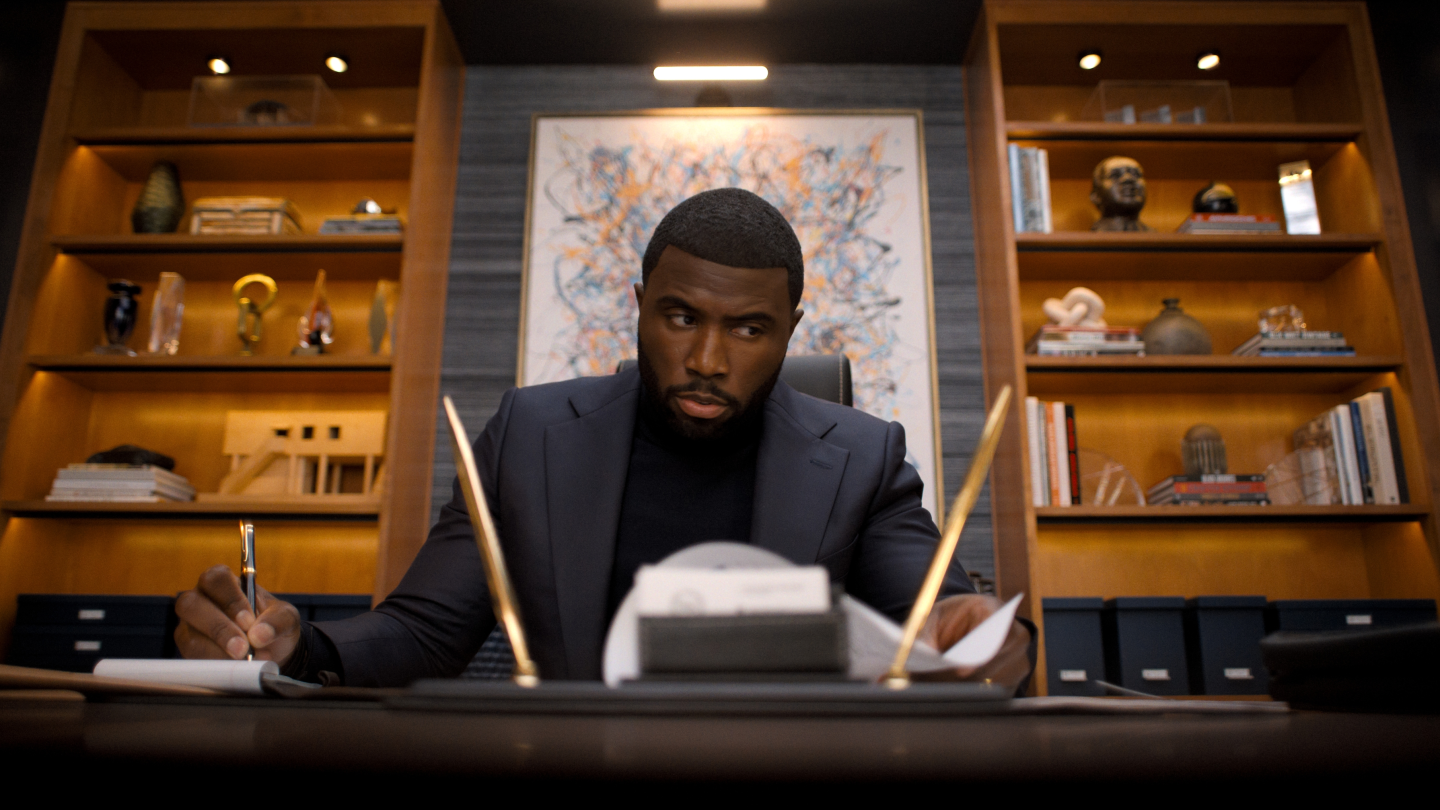
The result was Nemesis, an explosive cat and mouse game between a cop and robber. Created by Kemp and fiancé Tani Marole, the Heat-style thriller stars Abbott Elementary‘s Matthew Law as LAPD detective Isaiah Stiles and Insecure‘s Y’lan Noel as master criminal Coltrane Wilder. When his partner is killed in a robbery, Stiles becomes obsessed with finding the crew responsible, and he soon locks in on Wilder, who, in classic thief fashion, is planning one last job before riding off into the sunset.
Over eight episodes, the first season of Nemesis rips through more fiery events and story than most shows could in a multi-year run. There’s multiple heists, a massive, blockbuster-level shootout in the streets of Los Angeles, a pair of shocking deaths and plenty of pending trouble left on the table. Late in the finale, Stiles is in pursuit of Wilder, but Stiles’ teenage son Noah (Cedric Joe) is seeking his own revenge for Wilder killing his grandfather. Also in the mix is a cartel gunman, who shoots and injures Noah, and Stiles is essentially responsible since he’d previously asked the cartel kingpin to help him get Wilder. In the end, Stiles must choose between helping his son or allowing Wilder to get away. The cop allows his enemy to flee, but, before he does, Wilder declares, “You were never going to win.”
“Netflix asked us to wrap it in a place where you wouldn’t need a second season, and I was like, ‘Bet, we’re not doing that,’” Kemp says with a laugh. “But we knew that we did not want Coltrane to get caught. We didn’t want it to feel like you did all this for nothing, in a sense.”
Kemp admits that she was influenced by the lessons learned from the fan reaction to the conclusion of Power. Just over halfway through her final season, Kemp killed off her main character, drug kingpin Ghost (Omari Hardwick), and spent the last five episodes using Rashomon-style storytelling to unveil the identity of the killer.
“I thought I was playing fair with the audience, like I told you guys in the first episode that drug dealers are either dead or in jail, so I feel like those were the only two options,” Kemp says. “But what I did learn from that experience is that getting an audience to fall in love with someone means something, and so we wanted to make sure that both characters got their due by the end.”
With all eight episodes of Nemesis now streaming on Netflix, THR chatted with Kemp about wanting audiences to “chain smoke” this action-packed season and spending whatever it took to keep the show in Los Angeles.
***
We last talked for the Power Book II: Ghost season two finale, and you said, “I’m really excited about the next time we talk about a Netflix show.” I doubt either of us imagined that it would be four years between conversations! Are you surprised about how long it was from when you signed on with Netflix to premiering your first series?
In 2021, my brother died, and I thought I could throw myself into work, and it just didn’t work out that way; I was not really myself. I had intended to do very different things when I went to Netflix, as opposed to doing more of what people knew. I didn’t know exactly what Netflix was looking for, and it took me a moment to get that under my feet. And the Netflix process is not quick, it takes a long time to get things going. It all worked out exactly as it should, because I’m so proud of this show. I’m actually passionate about it, and it’s so great to find that again. As much as it is a collaboration with Tani, I do feel like my voice is in this show, and I finally got the sense of getting to write the way I like to write.
The last time you created an original series was over a decade ago. How have things changed in trying to get a project off the ground, especially one with no IP, no A-listers and Black leads?
It’s very different because Starz is a mom and pop shop. At that time, they developed one or two shows at a time, and it was so tiny that I was sharing an apartment with [writer-producer] Moira Walley-Beckett. She was there while Flesh and Bone was shooting, and then I would be there when Power was shooting. And Netflix is doing 900 different things at once, and you really have to be loud in order to break through that kind of volume.
When you have Black leads, the pressures are the same, in trying to explain to people what will be appealing. I try to make shows that show people of color — Black and brown and Asian — and queer folks, and yet, the universal stuff is there. Everybody’s got a dad, everybody’s got a mom, lots of people have sons and daughters, people are in relationships. And all those dynamics are there, so, whoever you are, you can find yourself in this show, as it should be. I’m not a New York City cop, but we all love John McClane (Bruce Willis in Die Hard). Why do we love him? Because we get where he’s coming from. And that’s what I’m trying to do.
Power paved the way for you and for more Power shows, but do you feel like it has had the impact on the TV landscape that it should? For example, I feel like every network has been chasing finding their own Yellowstone, and I don’t understand why that hasn’t been the same for Power.
I feel like what I do is a little bit comparable to Bruno Mars, in that there is never going to be another Bruno Mars. You could say that Bruno Mars is part-Prince, part-Michael Jackson, and part all these other things. I am very influenced by Tom Fontana, David E. Kelley, Dick Wolf, and all these people who were writing great crime TV when I was coming up. Every so often in my shows you’ll see a Jake and the Fatman reference, I’m taking from Miami Vice, — I did fucking Dallas, I did who shot J.R.! But when you put it all together, it’s its own thing. Nemesis is an action show, that’s also a family show, that’s also a workplace show.

Matthew Law as Isaiah Stiles, Y’lan Noel as Coltrane Wilder.
Netflix
Back to my Taylor Sheirdan example, none of those wannabe Yellowstone shows have been as good, because his unique voice can’t be replicated.
I completely agree. When you see those shows, you’re like, oh, that person thought that the setting was what was doing it, and no, that it’s not it. But it is what it is. I have imitators out there, and I’m happy to have them imitate. People think it’s the drama, the “oh shit,” but you gotta build those family relationships up for those “oh shit” moments to mean something.
With the combination of you and Netflix, I feel like you could have attracted some big name actors. Instead you opted for a pair of talented up-and-comers. What was the process of landing on Matthew and Y’lan as your Stiles and Coltrane?
This goes to where we are in the business right now,. We had a certain budget, and you can’t afford big stars on that budget; they’re just not gonna do it for that amount of money. Early in the process, Netflix said, “We don’t think you need big stars for this show,” and I was like, “Well, okay.” [Laughs.] But this is where my experience comes in. For Power, Omari hadn’t done a crazy amount of stuff, Joe Sikora had played these little character parts, Lela [Loren] was not really known. Doesn’t matter — TV can make stars. If the story’s good, then people will come.
Y’lan came in and had already decided how he was gonna play Coltrane. He had built this guy from the ground up: voice, mannerisms, presence, even how he walks and talks. And the way he did his audition is in the show. Matthew is a comedian by trade, and has this really light, ebullient personality, and then when he turns it on, you get rocked by how much presence he has. We had a lot of guys come in and test with Y’lan, and this happened to me [on Power] with Omari and Naturi [Naughton], where we had women test with Omari but Naturi was the only one who would really boss up and take up space. When Matthew came in to read with Y’lan, all of a sudden Y’lan was a slightly different actor; he wasn’t as calm. I was like, oh, there we go, that’s what it is. You needed the difference in their energy.
When we talked for the Power finale, I was so excited about the prospect of Tommy (Sikora) going to Hollywood, but then his spinoff ended up being set in Chicago. Now you finally made it to Los Angeles with Nemesis, and it sounds like you really pushed to ensure you shot here. How important was that to you?
It was everything to me. Netflix was willing to do it in Los Angeles, but, at first, they would have preferred we went to Atlanta. Then, over time, they understood, and we had the fires and they really were supportive about the fact that we were shooting in L.A. But it didn’t change our budget, and that’s not easy, especially because this is a high-action show — as you now know, at the top of episode six we do a major fucking shootout! And so I spent all the money. But I spent the money to keep it in L.A. because Los Angeles is important. We have great artisans, we have incredible below-the line-artists who need to work. And then the primary reason is I’m a mom to an amazing kid, and I left my kid before to shoot in New York for years, and I want to be here.
One of the things I appreciated most about Nemesis is how you guys did not hold back. In an era where it feels like so much of TV is slow-played, you went at warp-speed, with multiple heists out of the gate, a major character knocked off halfway through, and a massive shootout well ahead of the finale. Were you determined to just empty the clip and not worry about holding back for future seasons?
Absolutely. We didn’t wanna leave anything on the field. Tani would say something like, “There’s 24 frames per second, and rent is due every minute.” We were constantly focused on the best possible story we can tell in the shortest amount of time. And it was very different from Power, where I would fill up all 58 minutes and 30 seconds of that hour I was allowed. This, just get it, get it, get it! Because we wanted it to feel like you cannot stop watching this. Tani would say, “We want people to chain smoke these episodes.” As opposed to having a week for people to talk about the cliffhanger I left on Power, now this is, “I need you to stay in your seat.” So it’s a different tempo and dynamic of storytelling that has to be so fast. I wanted it to feel like exactly what you’re saying, which is, “Well, they’re not gonna do that… Oh shit, they did it!”
I guarantee that no one will get to the end of episode five and not immediately click play on episode six. How did you pull that Heat-esque shootout off? Living in Los Angeles, it’s clear that you were really out in these streets.
For episode two of Power, I wrote Ghost and Angela (Loren) going to the American Museum of Natural History, and everyone told me, “They will never let you shoot there,” and I was like, “I’m doing it.” I got told no so many different times…and then we shot it. And that’s how I felt about this. Tani was very insistent about how we were gonna do it, and I said, “We can’t afford to shoot for four days, so how are we gonna do this in a way that we can afford? ” And so it meant taking out other scenes.
But I wanted to be in L.A., and I wanted it to be recognizable. When you watch it, as an Angeleno, you’re like, oh, they are in Century City! Oh my god, they actually did that shit. And of course there’s a Heat homage, but I love to take something that you already know and add something. So, for me, what is so great about that scene is the moment that Stiles sees that it’s his dad he’s shooting at — I mean, fuck! Now we’ve added this whole other level. But that was hard to shoot in the middle of that, so we did have to add an extra day of shooting to get really good closeups and get that emotional story across. We really had to break that sequence as though it was its own movie.
What went into the decision to conclude season one with Coltrane on the run, as opposed to in handcuffs?
Netflix asked us to wrap it in a place where you wouldn’t need a second season, and I was like, “Bet, we’re not doing that.” But we knew that we did not want Coltrane to get caught at the end. We didn’t want it to feel like you did all this for nothing, in a sense. And I’ll admit that I have learned a little bit from how people reacted to Ghost’s death. I thought I was playing fair with the audience, like I told you guys in the first episode that drug dealers are either dead or in jail, so I feel like those were the only two options. But what I did learn from that experience is that getting an audience to fall in love with someone means something, and so we wanted to make sure that both characters got their due.
Even though his marriage is a mess, Stiles does choose to save his son, so he did learn something. It was maybe too late, but he grew. And, in that moment at the end, Coltrane knows what it is to lose a child, and he’s like, “Save your son.” He gets this great moment of beautiful redemption in his own way, even though you’ve seen him kill a bunch of people.
Courtney A. Kemp with Gabrielle Dennis, Matthew Law, Y’lan Noel, Cleopatra Coleman and Randy Ortiz Acevedo at a Netflix screening for Nemesis.
Frazer Harrison/Getty Images
You are no stranger to putting teen sons in the middle of their father’s dangerous work. And like Tariq (Michael Rainey Jr.) did on Power, Noah does teenager things and makes life more difficult for his father, putting them both at risk. At a certain point, fans were so frustrated with Tariq’s actions that Michael was receiving death threats. And yet, he and you got the last laugh because Tariq is now beloved and the hero of the Power Universe. After the events of the last few Nemesis episodes, are you prepared for the Noah and Tariq comparisons?
I’m always wrestling with inheritance, genetics, nature versus nurture. I think I mentioned to you before that my dad once said to me that he saw me as another son, even though I obviously am not. And some of the things that I’m trying to still work out are, how much like my parents am I? I mean, that’s so universal. From the beginning, Stiles says he’s not like Nightmare, and, as the audience, I assume you’re like, “No, you’re just like him.” There’s a moment where Noah says to his other grandfather, “Am I gonna be just like them,” and he’s like, “No, because you’re better than they are.” But, because you know me as a writer, all the things that have happened to Noah — the nurture, the trauma — he might not turn out so great. But whose fault is that?
So yes, I feel like people will compare him to Tariq, but he is different from Tariq. Tariq did not have as many other options. And Tariq was always f—ing up in school and doing stupid shit; he wasn’t a good kid. Noah’s a good kid. And we are trying to tell a different story. Also, Tasha (Naughton) and Noah’s mom are not the same. [Laughs.]
Having interviewed you for season finales so many times over the years, I probably shouldn’t even bother asking you to tease a possible second season.
Boy, you know me better!
But I have to try! So what would you feel comfortable sharing about what a season two would look like?
I think we have made it pretty clear that there are some more consequences coming for Stiles. And I think we have definitely ended the season where Coltrane’s gonna have to go find his wife. And that’s pretty much all I can say.
You walked away from running the Power shows after season two of Ghost, so how involved are you still with the various prequels and sequels? The fans are all very excited about the Ghost and Tommy origin series and the rumored team up of Tommy and Tariq.
Those are my boys, Ghost and Tommy, so I’m involved in Origins. Sascha [Penn] runs it, and I’m very careful to not overstep, because I can’t give it my full attention, so it would be really messed up to dip in and out, so I kind of leave it to him. But Sascha was a writer on Power for the first year, and so we share a lot of the same ideas about how the show should be. We are waiting to hear when the Tariq and Tommy spinoff will happen. I’m really happy about Origins, and I think people are really gonna love it.
***
Nemesis is now streaming all episodes on Netflix.