Normal features many of the same players from Bob Odenkirk’s Nobody films, but director Ben Wheatley never worried about any potential overlap from the similarly titled actioners.
The British filmmaker knew his unique sensibilities would shake up Odenkirk’s Nobody brain trust that includes producing partner Marc Provissiero and screenwriter Derek Kolstad, as well as second unit director Greg Rementer and several stunties. The only concern on the Nobody front was making sure that they didn’t shoot at any of the same locations in Winnipeg, the capital city of Manitoba, Canada. (The pic is also reminiscent of Odenkirk’s tenure on Fargo season one.)
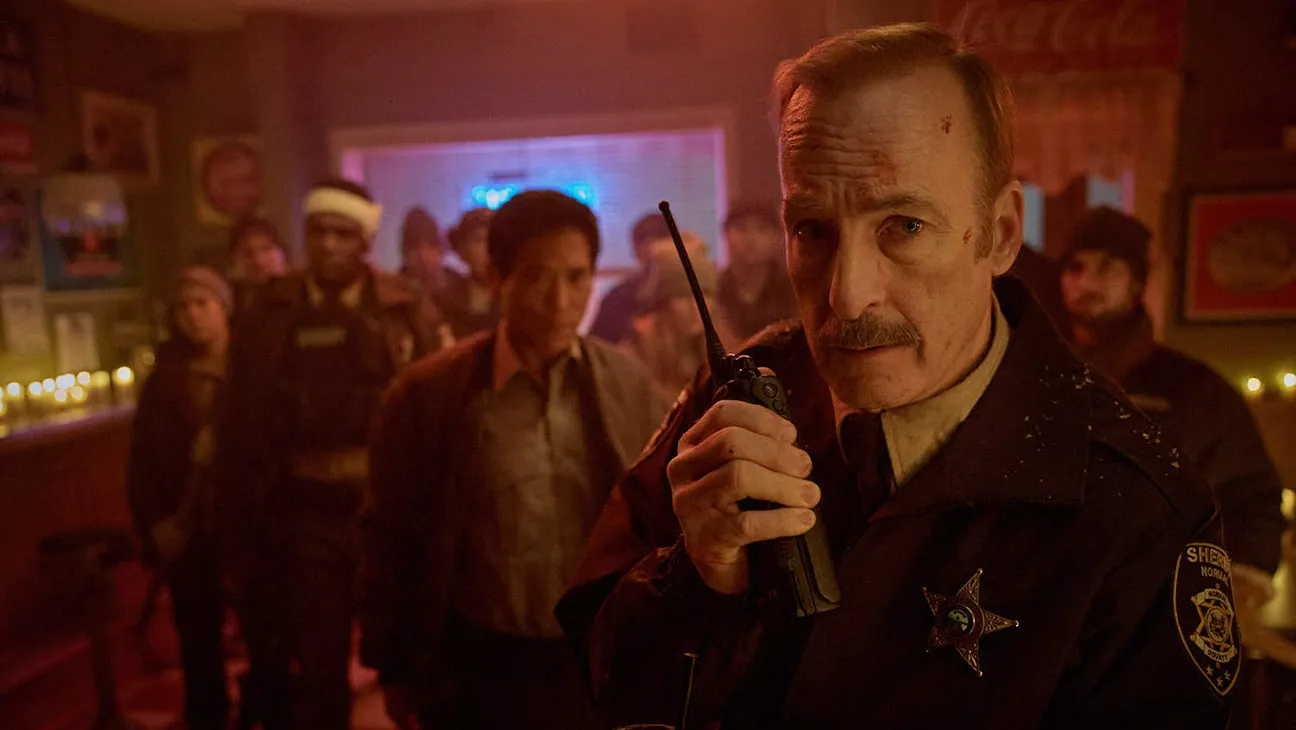
Normal chronicles Odenkirk’s roving sheriff named Ulysses upon his arrival in Normal, Minnesota, where he intends to serve on an interim basis until a new officer is elected. Ulysses grapples with his own personal demons when he begins to notice some irregularities in the seemingly idyllic small town. He then makes an unexpected discovery during a bungled bank robbery, and he’s forced to square off against the entire town.
His one ally is a young character named Alex (Jess McLeod), the child of the deceased sheriff Ulysses replaced. He recognizes that the townsfolk reject Alex, and so he extends a bit of compassion in a critical moment. It’s then subtly revealed that Alex is trans/nonbinary, hence the town’s cold shoulder, and it’s an admirable choice for the Normal team to make at a time when studios are cutting or canceling anything that might ruffle the feathers of the current U.S. administration.
Wheatley and co. wanted to portray the progressive character in an organic way without fanfare, and the film at no point feels like it’s patting itself on the back. He also says that the indie feature never received any pushback from financiers.
“The policy of normalizing it — no pun intended — and treating it in a human way rather than making it an issue was really important,” Wheatley tells The Hollywood Reporter. “So it’s there, but it’s not a big deal. I think that’s the way to confront these things or to represent them.”
As for the future of Odenkirk’s Sheriff Ulysses, Normal brass have already indicated a desire to continue his story if the demand is there.
“We’ve been talking about it. I can see that there’s a continuing story for him, but you don’t want to jinx it too much by going on about it,” Wheatley says. “It’s just about making sure that another story doesn’t feel like it’s exactly the same circumstances. So I could see it having legs.”
Below, during a recent conversation with THR, Wheatley also discusses working with Odenkirk the writer, particularly his fondness for last-minute rewrites.
***
Most of your dozen films have been in the independent world, but you have made a couple studio or studio-adjacent films in the last handful of years. Is the indie space where you’d rather be? Or do you not care as long as you’re on a set?
Yeah, that’s the point. I just like working. I always wanted to do a big studio thing [Meg 2], and I now have had that opportunity, which was pretty amazing. But indie films are great as well. It’s about whatever can be developed and get to set. When you’re standing there with a bacon roll in your hand and getting ready to shoot, that’s what it’s all about.

Ben Wheatley on the set of Normal
Courtesy of Magnolia Pictures
It sounds like your agent took the initiative and reached out to Bob Odenkirk and co. before the Normal director search even started. That’s quality representation if you ask me. How common is that approach?
I don’t know. I don’t really know the ins and outs of what the agents get up to. It’s always a nefarious and secret world, and they like to keep it that way. My agent, Phil d’Amecourt, I’ve had him for 13 years. He was the first guy who was interested in what I was doing, and I’ve been with him ever since. So it’s served me very, very well.
Bob, his producing partner Marc Provissierro and screenwriter Derek Kolstad collaborated on a couple Nobody films. And while there is some overlap within second unit and the stunt department, did everybody create a whole new action playbook?
I think that happens organically when a new director comes onto a project. I was happy that I was inheriting some of the team from Nobody. They’d all worked together, so they had a shorthand. But there was never any pressure. I never saw any of Nobody 2 till well after Normal had finished. So I didn’t know what they were up to on that movie, particularly, and any style stuff didn’t really swap over.
Bob Odenkirk’s Sheriff Ulysses in Normal
Courtesy of Magnolia Pictures
Bob never said, “Oh, we did this on Nobody, so let’s try something else”?
No, the only time it came up was when we were looking at locations [in Winnipeg]. Someone would [clear their throat] and go, “We’ve shot here already.” And I’d go, “Well, we can’t shoot here then.”
You’re known for a violent Kill List scene involving a hammer. During Normal’s hardware store fight, were you tempted to reunite with one for further bloodshed?
No, hammer stuff has been so done. It’s in loads of different movies now. So I try not to repeat myself if I possibly can.
Yeah, Lynne Ramsay and Joaquin Phoenix pretty much maxed it out in You Were Never Really Here.
They hammered it. (Laughs.)
Yes, they hammered it home. Bob is a writer at heart, and he’s known for rewriting scenes the night before shooting. Is that something he prepared you for ahead of time?
Not particularly, but I’ve worked in all sorts of different modes. I’ve worked with scripts where not a single comma was changed, and I’ve worked with improvisation and very loose scenes that are fleshed out on the day. So once I got the tempo of what we were doing, it was fine. Every film is different in that respect. He’s a rare beast on this one. He has a ‘story by’ credit, and he’s the star and a producer. So he has a lot of sway, but that’s fine as well.
Sometimes, it was just eliminating dialogue in favor of a gesture or facial expression?
Well, everybody on the main team interrogated the script all the time. We’d look at it and think about how we can make it better. So, going through that process, it can be challenging on the day, but it certainly pays dividends later on. I don’t think there’s anything we changed that we regretted afterwards, but it’s just about keeping it as tight as possible. That goes all the way through into the edit, obviously. In the edit, there’s a lot of ADR and a lot of tightening up and a lot of thinking about the structure of it. So it doesn’t really stop until you’ve finished the sound up.
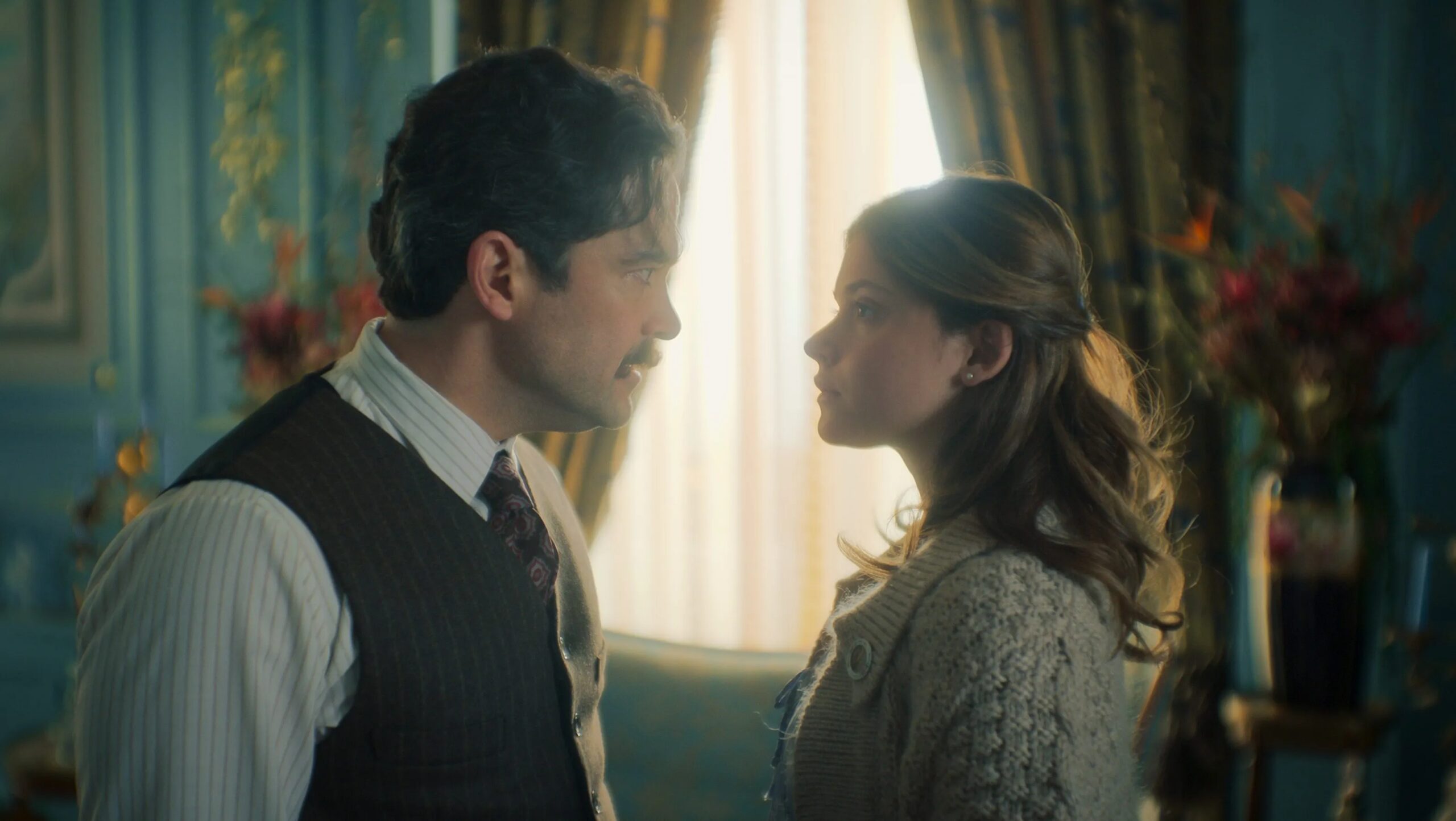
One of the most well-written scenes in the film is when Bob’s character, Ulysses, gets in Alex’s (Jess McLeod) van and has a conversation about the nature of that character’s identity. It’s so subtle and accepting at a time when progressive themes in American movies are facing greater scrutiny. Did you deal with any resistance from financiers over that character detail?
No, not really. The policy of normalizing it — no pun intended — and treating it in a human way rather than making it an issue was really important. So it’s there, but it’s not a big deal. I think that’s the way to confront these things or to represent them.
Bob Odenkirk’s Ulysses and Jess McLeod’s Alex in Normal
Courtesy of Magnolia Pictures
Yeah, Ulysses does the math and makes an adjustment before moving on with the conversation. It’s as simple as that.
And that’s his general approach across the whole movie. He takes it in, and it’s live and let live until it’s not.
Thematically, it makes sense. The entire town flips the concept of “normal” on its head. Alex then helps Ulysses make a stand, and that character gets to do some of the coolest business in the movie.
Yeah, that was good. Ulysses has to make a choice at some point. He’s a good man, but he’s being slightly dragged by the things that he’s done in the past. He’s slightly gun-shy about making decisions, and it builds slowly that he has to make a stand. He interacts with all these different people, and whilst you can see he’s a kind person, how far will he be pushed?
You’d think that shooting in Winnipeg would provide ample opportunities for snow, but it didn’t work out that way. Did the soundstage blizzard work out better than you expected?
Well, the whole timing of the film was about waiting for the snow, and then as we got closer to it, we were going, “Oh God, it’s not going to happen.” I was already wary about trying to shoot outdoors at night in Manitoba. It was going to be punishingly cold — snow or no snow. So it was a blessed relief when the production made the decision to shoot some of it indoors. But it’s actually cross-cut with stuff that’s outside as well, so hopefully you don’t really see the joints of it.
There was a lot of talk with the Canadian production team about how cold it was going to be, and we were like, “Yeah, yeah, yeah.” Then, when it really did snow, we went out to shoot on location, and I’d never experienced anything like it. I stepped out of the warmth of the Winnebago, and all the hairs in my nose just froze. I took just one step outside, and I went, “Oh shit, this is serious.” So we did a day in the proper cold, and that was a day too long.
Aside from rewrites on the day, how similar is the final film to the script? Did you leave anything noteworthy on the editing room floor?
No, nothing. It’s all very much in there. Derek’s script was already pretty tight. So there aren’t going to be any deleted scenes.
As a roving sheriff who goes from small town to small town, one can imagine further adventures for Ulysses. Does the Normal team have any ambition to make this a franchise?
Oh yeah. We’ve been talking about it. I can see that there’s a continuing story for him, but you don’t want to jinx it too much by going on about it. It’s just about making sure that another story doesn’t feel like it’s exactly the same circumstances. The thing about Bob and the way he played the character — and from seeing it with lots of audiences — I think people warm to the character. So I could see it having legs.
Bob Odenkirk’s Sheriff Ulysses in Ben Wheatley’s Normal.
Courtesy of TIFF
If there is a sequel, it sounds like the opening slug line will announce a warmer location.
That’s exactly what’ll happen, yes. (Laughs.) But look, it’s location, not vacation. You can be just as miserable in the warm as you are in the cold.
As I mentioned, you’ve now made a dozen films. Do you ever feel like you’re getting close to figuring it out or cracking the code?
No, there’s no mastering it. You crawl over one mountain to reveal an even larger mountain range in front of you. The challenge is part of the joy of it. Every film is a different challenge, and there’s so much craft to learn. So I don’t think any artist would say that they’ve mastered this. That’s the kind of hubris that comes before a terrible fall, isn’t it?
When you watch your earlier work, do you recognize the same instincts in your work today?
I don’t know. I’m blessed with more of a short-term memory. So when I watch my old films, I come to them fresh each time and go, “Ooh.” And without sounding like a massive big head, I do enjoy watching them. Some of them are so old now that they feel like period pieces, which is quite fun. You can see that societal attitudes have changed over time.
I try to plan stuff as much as possible, but a lot of it is on instinct, so you can’t really pin down instinct. You can’t tell whether it’s something that transfers from movie to movie, particularly because you’re just reacting to the material and to the actors and to the crew on the day. So in that respect, it’s still the same, I guess.
But I know that I’m not as nervous as I was when I started. I have a confidence that I can pull it together now. It doesn’t feel so much like a train hurtling down a track with the rails being laid in front of it anymore.
What about camera work? Do you still have many of the same tendencies?
Camera work, for me, is a budget thing. On the lower-end budget, you’re basically handheld because you’ve got no choice. Then, as you crawl up the budgets, you unlock grip equipment, or you’re able to build sets and control things. So the bigger the budget, the more control you have over the minutiae. Then you can branch out into controlling longer shots and things like that. So there’s genres of filmmaking in terms of content, but there’s also genres in terms of budget. I’ve always thought that. A low-budget film is a very, very different beast from a mid-budget or a high budget movie.
Lastly, I read that you secretly made music under a pseudonym (Dave Welder), and no one knew about it until recently. What’s the story there?
I’ve always loved music, but it was an art form that I just didn’t understand at all. I couldn’t imagine how people did it, and I wanted to understand it more. So I made a concerted effort to teach myself how to sequence synthesizers and create music. I use it to relax, but it also helps me for work. My conversations with actual composers now have more of an understanding of it, but I’m never going to use it in a technical way to tell them specific things that I want. I don’t believe in that stuff. You get back what you tell people, and if you tell them too much, then you just get yourself back, which is not what I want from composers. Film composers are like casting actors. You’re hiring them for their specific skills. But I enjoy writing music a lot.
***
Normal opens in theaters on April 17.