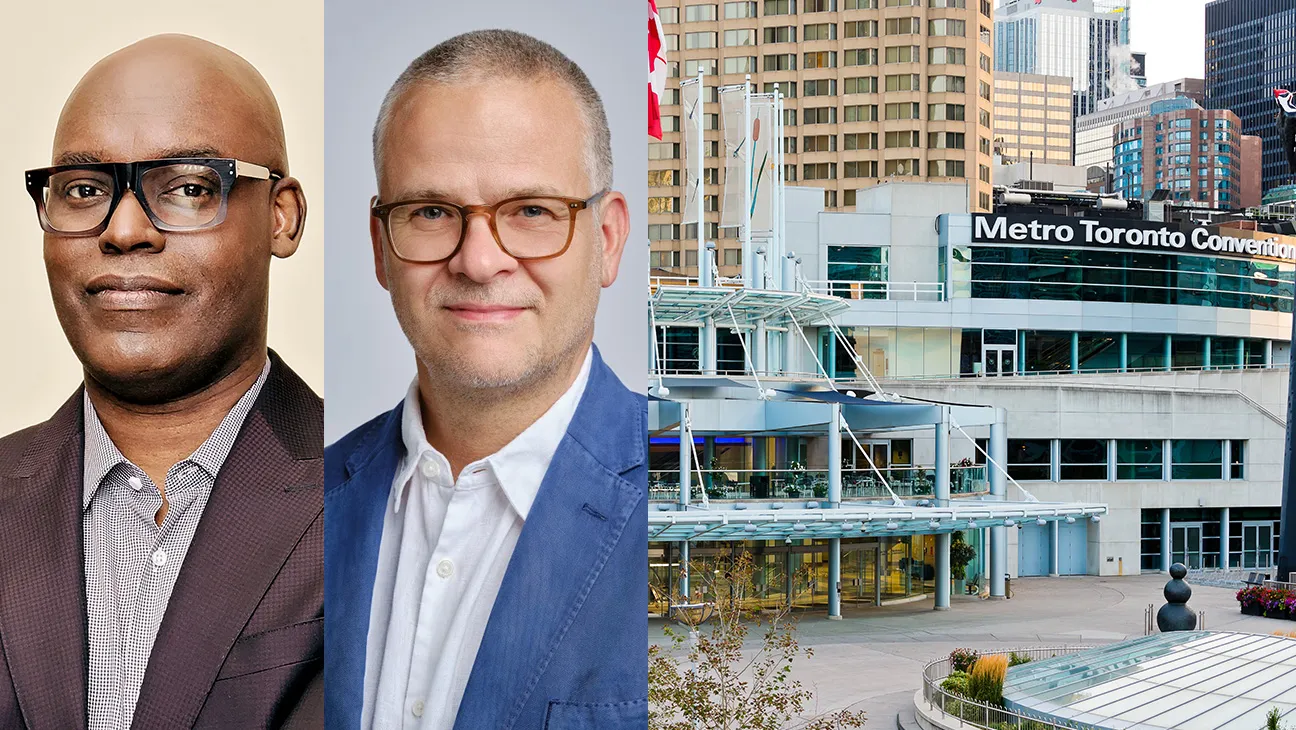
After years of operating one of the world’s busiest unofficial film markets, the Toronto International Film Festival is finally making it official. This September, TIFF will launch its first fully fledged content market, a move CEO Cameron Bailey says has been “years” in the making — and one designed to reshape the North American dealmaking landscape at a moment of rapid industry change.
The TIFF Market arrives with ambitious aims: to bridge the long gap between Cannes and Berlin, offer a more structured alternative to the festival’s long-running informal marketplace, and position Toronto as a global hub where film, TV and emerging media converge. As Bailey notes, the goal is to create a space that reflects how the business itself is evolving, with intellectual property now flowing freely between formats and platforms.
Leading the effort on the ground is newly appointed head of market Charles Tremblay, a veteran distributor and executive with more than two decades of experience in the Canadian and international film business. Tremblay began his career as a lawyer before joining UTA as an agent trainee, later co-founding Metropole Films Distribution with Mongrel Media, where he served as managing director for 11 years. He went on to launch MK2 | MILE END in partnership with France’s mk2, which was later acquired by Sphere Media and became Sphere Films, where he served as president until 2024. Most recently, he worked at MUBI, overseeing the Canadian releases of titles including The Substance, Queer and Maria. Over the years, he has acquired and released a wide range of festival hits, from Parasite to Aftersun and The Worst Person in the World.
Together, Bailey and Tremblay are betting that Toronto’s existing strengths — its global audience, dense festival footprint and reputation for industry-friendly logistics — can translate into a market that competes not by scale, but by convenience and integration. The pitch: a compact, walkable, “full-service” market anchored by curated screenings, expanded buyer programs and a growing focus on cross-platform storytelling.
As Tremblay puts it: “Once we’ve explained to people that it’s going to be a full-service market — they’re in.”
You’ve been planning the TIFF Film Market for several years now. What’s been the biggest challenge in getting it over the line?
CAMERON BAILEY There have been all kinds of challenges. We’ve had strategic, logistical, financial and operational challenges in really bringing this on stream. Of course, we’ve been doing informal market activity and making that possible at the festival for many years, but this is different. We want to provide a bigger platform for people to do business, to meet each other and advance the networks that are necessary in a really quickly changing industry now. So it’s taken not just months, but years to really get it fully up and running. We’ve now got a great team in place, and we’re excited to be able to bring a lot more of the dealmakers, the creative people, the financiers, the buyers and sellers to Toronto every year.
CHARLES TREMBLAY I just joined seven months ago, so I wasn’t part of all the work. But I remember when Cameron mentioned his idea to me a while back, I always thought that it was a good idea. It’s not being built from scratch. TIFF Industry has been around for a long time. It’s been providing very good services to the industry, and a good chunk of the staff is transitioning from TIFF Industry to the market. We have those veterans still with us. Also, the senior staff on the festival side have been heavily involved in putting this together. These are people who put together what is widely considered one of the best organized festivals in the world. There’s a very solid base to build on and expand.
Toronto has had a successful informal market for many years. What benefits come from creating a formal one?
TREMBLAY I was a distributor for more than 20 years, so I’ve attended a lot of festivals, especially TIFF every year. I’ve always felt it was a bit of a missed opportunity given the size of the festival and all the people attending. I could have used a more structured market, and I think a lot of people feel the same way. There’s an eight-month gap between Cannes and Berlin, and both are in Europe. None are in North America. Meeting in lobbies and Zooms works when that’s the only option, but people prefer in-person interaction in a structured environment. That’s why [Berlin’s] EFM and the Marché du Film [in Cannes] have been successful.
One of the biggest changes will be the market screenings [at TIFF]. This is a game changer because it allows sales agents to show films that are not necessarily in the festival to buyers. We’ll have about 400 slots, including two days prior to the launch. That allows promo reels and films to be shown before the market officially begins.
Also, one of the main benefits of Toronto is that people no longer have to rush finished films, promo materials or artwork in time for Cannes. They can hold back and know they have a strong option three months later.
BAILEY We’re going to be doing something that is really unique in North America. Right now, there is no official market attached to a major film festival. A major festival brings filmmakers, talent and professionals who are already in town. We’re building on that with market activity. Toronto is a very global city, and we’ve always designed our festival to be very international. That will be part of the market as well. We have professionals who speak your language and understand your culture. That’s going to allow us to attract people from every continent. It’s an easy place to do business, and that’s something we can offer that nobody else does.
Are you hearing concerns from international executives about travel, visas and border restrictions in the U.S.?
BAILEY We’ve heard from some international colleagues that the U.S. industry remains very important, but some are hesitant to travel to the U.S. right now. We’ve always been a place where the world meets the American film industry, and that will continue. There’s already a proven desire to do business in Toronto even without a formal market. We just want to offer more services and reasons to come. We’ve also worked on affordability. Hotels will start around $200 to $220 U.S. [early bird rates for attendees that book by June 5]. It’s going to be affordable, convenient and walkable. We’re trying to build something that serves the industry in ways they can’t find elsewhere.
To what degree does this international focus reflect broader changes in the industry, and the global success of non-English-language content?
BAILEY Toronto audiences have been international for years — anime, K-dramas, Latin American telenovelas. People here already watch global content. That’s been part of the festival’s DNA for decades, and it will be part of the market as well. We’re hearing a lot about emerging territories like Southeast Asia. We want this to be a place where that business happens.
Your vision is broader than a traditional film market. Can you explain that?
TREMBLAY Everything will be housed in the Metro Toronto Convention Centre. Film will remain the core, but there will also be space for series and the immersive industry. We’ll have an innovation hub featuring eight XR works. Programming will include speakers from TV and innovation sectors. Over time, we want to grow into a full content market serving film, series and innovation.
BAILEY Intellectual property moves fluidly across platforms. A video game can become a TV series, films become shows, immersive media becomes something else. We want to focus on great stories looking for financing and the right way to reach audiences. Audiences are multi-platform now, and the market should reflect that.
Do you see competition with AFM or, on the TV side, with MIPCOM?
BAILEY Budgets are tight and companies have to be nimble. Our response is to build the most convenient market possible. Everything will be within a 12-minute walk. The Metro Toronto Convention Centre will be the hub, with companies nearby. Screenings and gala venues are also close. We want to reduce the pain points people experience at other markets and make this as attractive as possible.
What are you doing specifically for buyers?
TREMBLAY We’ve invited 200 net new buyers — people who stopped attending or haven’t been attending TIFF. We worked with stakeholders to ensure we have the right buyers. That’s on top of around 800 who already attend. The response so far has been very strong.
What are your attendance targets?
TREMBLAY Historically, TIFF Industry had about 5,000 delegates. We’re hoping to add around 1,000 in the first year, so about 6,000. We’ll have around 120 exhibitors at the MTCC and additional space in partner hotels like the Ritz and the InterContinental. In total, about 160 exhibition spaces, with room to grow.
What kind of companies do you expect to attend?
TREMBLAY We’ll still have a strong presence from film bodies, but also more sales agents taking space like they do at other markets. We expect a very international mix — North America, Europe, Latin America and Asia. Our buyer invitations were designed to reflect that global spread.
How integrated will the market be with the festival?
BAILEY It’s one organization running both. There’s integration, but also a dedicated market team. We’re bringing decades of experience in running a smooth festival to the market. A lot of the TIFF Industry team has transitioned over. We’re building on long-standing relationships with industry leaders and speakers. That gives the market a head start.
TREMBLAY They take place in the same compact area. That creates energy and allows for interaction between festival goers and industry participants. We will also be doing curated market screenings, which will be private screenings but with a mix of buyers and curated audiences. For example, a sales agent can request 50 buyers and 150 audience members. Using TIFF’s database, we can target specific demographics. That creates a real audience experience, which is unique [among film markets].
Will the market also include packaged projects, not just finished films?
TREMBLAY It will still have a strong offering of finished films, but we’re also seeing interest in packages. Agencies like CAA, WME and UTA are eager to launch packages in Toronto. One advantage is timing — it allows them to close financing before the end of the year.
What is still keeping you awake at night ahead of the launch?
BAILEY Travel challenges are a concern, as are costs. We want to make sure we’re affordable and accessible. Beyond that, it’s like hosting a dinner party — you prepare everything and wait for guests to arrive. We’re excited and looking forward to opening the doors.
TREMBLAY I share those concerns, but I sleep pretty well. We’ve assembled a great team. Feedback has been very positive. Out of around 150 meetings, most people are enthusiastic and say they’ve been waiting for this. We’re confident we’ll put on a great market.