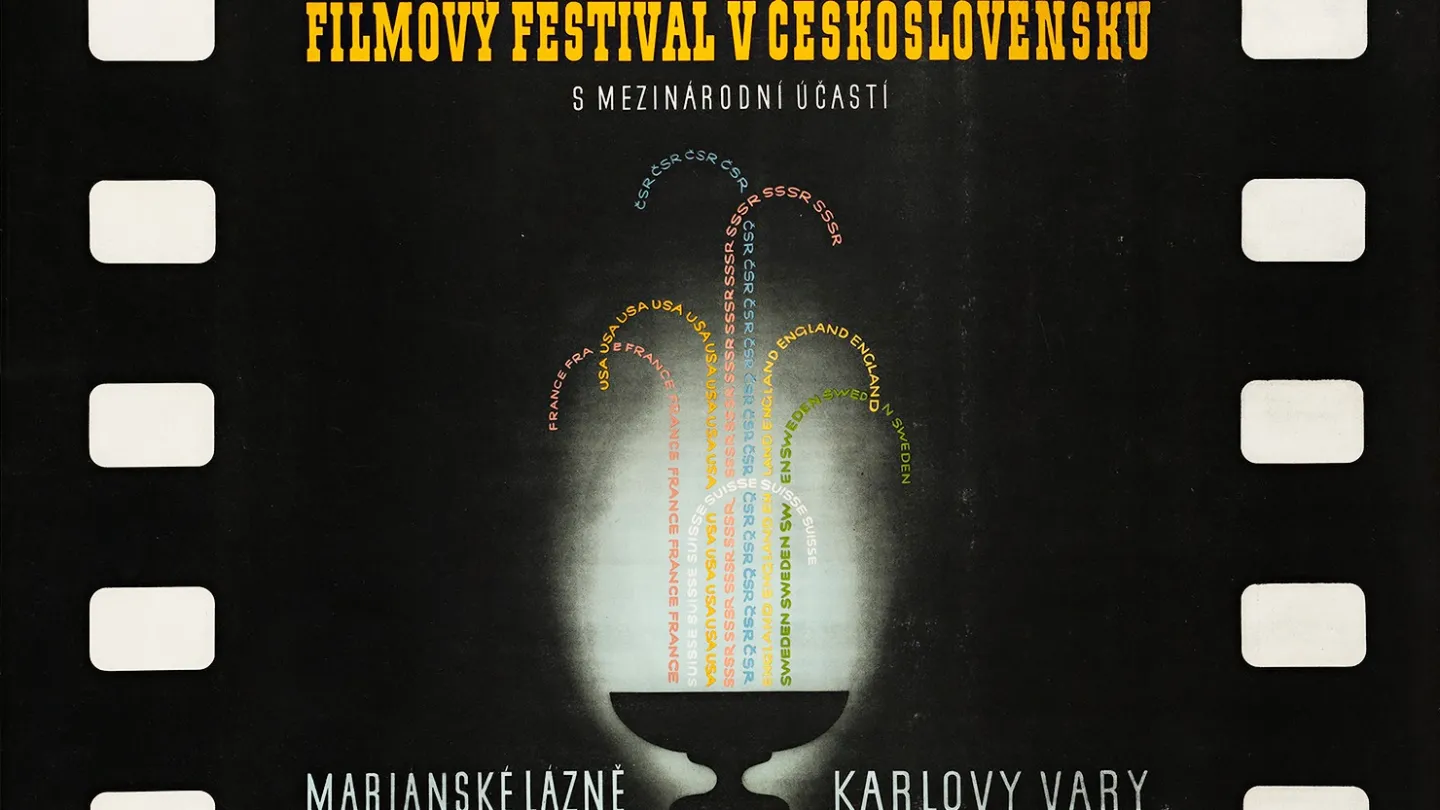
The Karlovy Vary International Film Festival (KVIFF) will celebrate two key milestones during its 2026 edition, organizers said on Tuesday. It will mark the fest’s 60th edition, as well as 80 years since the first festival. Classic films from the likes of Michael Powell and Emeric Pressburger, as well as Ken Loach, will be among the ways the fest will fete the dual anniversaries, along with an exhibition, a photo exhibition honoring later former president Václav Havel.
Plus, audiences can expect a redesign of an iconic fest space. “For this and future editions, the Karlovy Vary festival is redesigning the area around the entrance to the Hotel Thermal’s Grand Hall with a new architectural design that will allow audiences to more intensely experience and share in the festival atmosphere during the festival’s opening and closing ceremonies, as well as at festival screenings,” organizers explained. “Guest arrivals with live commentary will bring the festival action closer to visitors and add interesting behind-the-scenes observations.”
KVIFF also unveiled a gala screening of a digitally restored copy of Věra Chytilová’s 1989 tragicomedy Tainted Horseplay, which became the Czechoslovak entry for what was then called the best foreign- language film at the Oscars. Plus, actress Magda Vášáryová will receive the President’s Award at KVIFF 2026, which runs July 3-11. “The festival aims not just to express its respect for the performances of one of the greatest Slovak actresses of all time, but also to remember the unique artistic connection between the Czech and Slovak filmmakers who shaped our two countries’ shared cinematic history,” the fest said.
More programming for the dual anniversary year will be unveiled in the near future. “The Karlovy Vary festival is an event at which long-term tradition and the format of a modern film festival come together in a unique way,” said KVIFF executive director Kryštof Mucha on Tuesday. “Few domestic cultural events can boast such a rich and varied history. This is thanks in part to the distinctive personalities who have shaped its identity at various points in its history. There is much that has formed its character over the course of its 80-year history, but it is up to historians to assess the extent to which the state’s cultural policy, the international situation, and various other factors have influenced the festival’s organizational and artistic qualities.”
That said, he emphasized that “the foundations laid by the festival’s first editions in the post=war years have given rise to an event that has managed to survive despite all internal tensions and external influences, that has withstood attempts at ideological control and efforts to abolish it, and that has succeeded in transforming itself into an internationally recognized showcase and a venue where filmmakers and audiences can meet in a unique atmosphere of harmony. It has become a festival that honors its legacy and that manages to reflect the present while confidently shaping the future of cinema.”
One of the oldest film festivals in the world, Karlovy Vary was part of the so-called “first wave” of post-war European film festivals. Its first edition was held in 1946 as a non-competition event with 13 features, including international participation, organized by the spa towns of Mariánské Lázně and Karlovy Vary during the first half of August. Organizers noted that it took place “before the inaugural editions of the festivals in both Cannes and Locarno and even predates the first post-war edition of the world’s oldest film festival, the Venice Film Festival (founded 1932, renewed 1946),” making KVIFF the second-oldest fest.

Ken Loach’s ‘Kes,’ courtesy of Park Circus, Amazon MGM
After presenting awards for the first time in 1948, in 1950, the fest moved permanently to Karlovy Vary. “The earliest editions had to contend with political realities that significantly intervened in its programming decisions,” organizers highlighted. “One key figure who determined the festival’s character for several decades was the journalist, educator, and internationally respected expert Antonín Martin Brousil (1907–1986). Besides contributing to the festival’s founding, he chaired its main juries for many years and essentially served as its unofficial programming director. “
Recalled KVIFF artistic director Karel Och: “Before my predecessor, the artistic director Eva Zaoralová, there was her predecessor, one of the founders of KVIFF and Antonín Martin Brousil. It is also thanks to him and the Karlovy Vary festival that films from Africa, Asia, and Latin America are today admired at leading film festivals around the world. As early as 1962, Brousil created a platform for film pioneers from these very continents within the legendary section ‘Symposium of Young and New Cinemas‘.”
But wait, why is KVIFF celebrating its 60th edition this year, 80 years after its launch? Yes, there was no edition due to COVID in 2020. But beyond that, “the disproportion between the two anniversaries, 60 and 8, is the result of several different factors,” organizers explained. “After not being held in 1953 and 1955 by political edict, the festival subsequently took place only every other year. Starting in 1959, the festival, which two years earlier had been recognized as a category ‘A’ festival by the FIAPF (International Federation of Film Producers Associations), a category that also includes Cannes and Venice, had to share this prestigious label and alternate years with the newly founded Moscow International Film Festival.”
But “turbulent changes” remained part of the fest’s history, organizers noted on Tuesday. “After spending the 1950s in search of a meaningful identity, the festival truly spread its wings in the following decade, when it hosted numerous representatives of international cinema, only to suffer two decades of ‘normalization’ – a period full of restrictions that influenced both the selection of films and the awarding of prizes. Only with the easing of outside pressures in the second half of the 1980s did more substantial foreign films and interesting guests gradually return to the festival.”
KVIFF’s first post-Velvet Revolution edition in 1990 welcomed a number of exiled or banned filmmakers and the screening of titles that had previously been censored. However, uncertainty and deliberations about the fest’s purpose followed, leaving KVIFF on the verge of being canceled. “Thanks to the initiative of the forward-thinking filmmaker, artist, and Ministry of Culture official Igor Ševčík, the Karlovy Vary International Film Festival Foundation was established in order to take the festival’s organization out of the hands of the state, and the festival’s organizing team came to be headed by Jiří Bartoška as president” and Zaoralová as artistic director, organizers explained. “It is no exaggeration to say that these changes began an extraordinary period during which the festival was transformed into an event meeting modern and international standards. Among other things, the illogical alternating of festival years with Moscow came to an end, and since 1994, the festival has been held annually in Karlovy Vary. The festival also successfully fought off attempts to move it to Prague, and after two years of stiff competition from the Prague Golem festival, it reasserted its status as the country’s most important cinematic event.”
‘Tainted Horseplay’ film still, courtesy of KVIFF
Here is a look at other KVIFF celebrations set for this year.
Exhibition: KVIFF 60/80 (1946–2026)
The festival looks back on its history with an exhibition of photographs focusing in particular on its lesser-known early years, the atmosphere of its pre-1989 editions, and key moments and guests. For that purpose, 30 outdoor panels, located along the path between two of the iconic KVIFF venues, the Grandhotel Pupp and the Hotel Thermal, will take visitors on “a symbolic journey” through the festival’s 80-year history.
Out of the Past – KVIFF 60/80 (1946 – 2026)
The popular “Out of the Past” section, which puts a spotlight on classic movies, will focus on important titles from the festival’s history. “One of the festival’s most popular permanent programs, which regularly looks back at the history of cinema, will take on a celebratory form this year,” said Och. “It will consist of twenty carefully selected films from previous editions of the festival, which are firmly linked to its history as milestones key to the KVIFF’s identity and reputation.”
Among the films unveiled on Tuesday are Michael Powell and Emeric Pressburger’s A Matter of Life and Death, which festival visitors could first see in August 1947, Ken Loach’s classic Kes, which screened at KVIFF in 1970 and won the festival’s top prize for best film, Mexican director Emilio Fernández’s Río Escondido, which traveled to the fest in 1948, and the drama Lissy by Konrad Wolf, “a legend of East German cinema,” which won one of the main prizes in 1957. But there is more: “For a long time, the print of one of the fundamental films in Australian cinematic history, the adventure drama Captain Thunderbolt, was considered lost – until 2024, when an original, uncut 35mm print was found in the Czech National Film Archive,” fest organizers said. “This year’s celebratory program will commemorate the premiere of New Zealand director Cecil Holmes’s film in the competition of the 7th KVIFF in 1952.”
Special festival sneak preview in Mariánské Lázně
The twin-city format of the festival’s first edition will return this year with a special preview screening of a selected film from this year’s program on July 1 at the historic Municipal Theatre in Mariánské Lázně.
President Václav Havel and the Karlovy Vary festival
“Over the past 30 years, the Karlovy Vary International Film Festival has enjoyed the support of numerous important figures, including director Miloš Forman, U.S. Secretary of State Madeleine Albright, and President Václav Havel,” organizers highlighted. “As a gesture of thanks for president, playwright, and author Havel’s long-term support and goodwill, the festival is marking what would have been his 90th birthday with a photographic exhibition at the Hotel Thermal commemorating his visits to the festival and his meetings with various representatives of world cinema.”