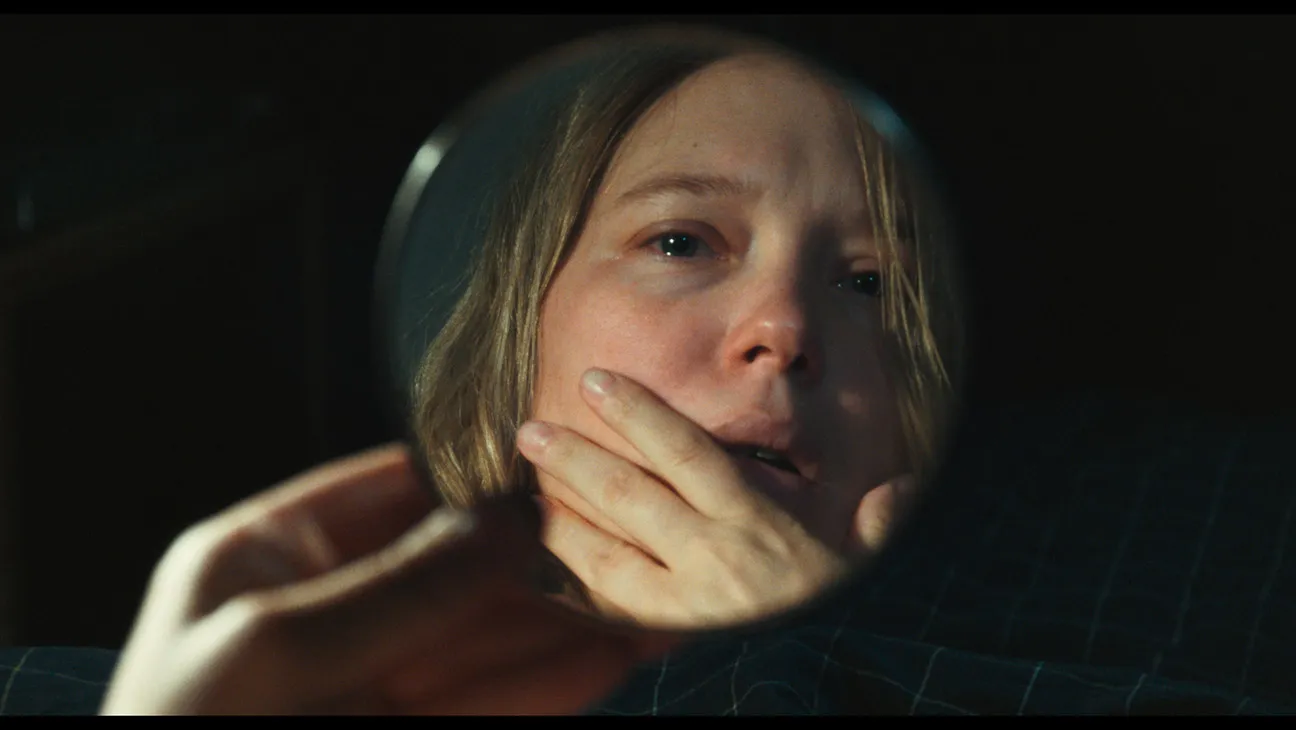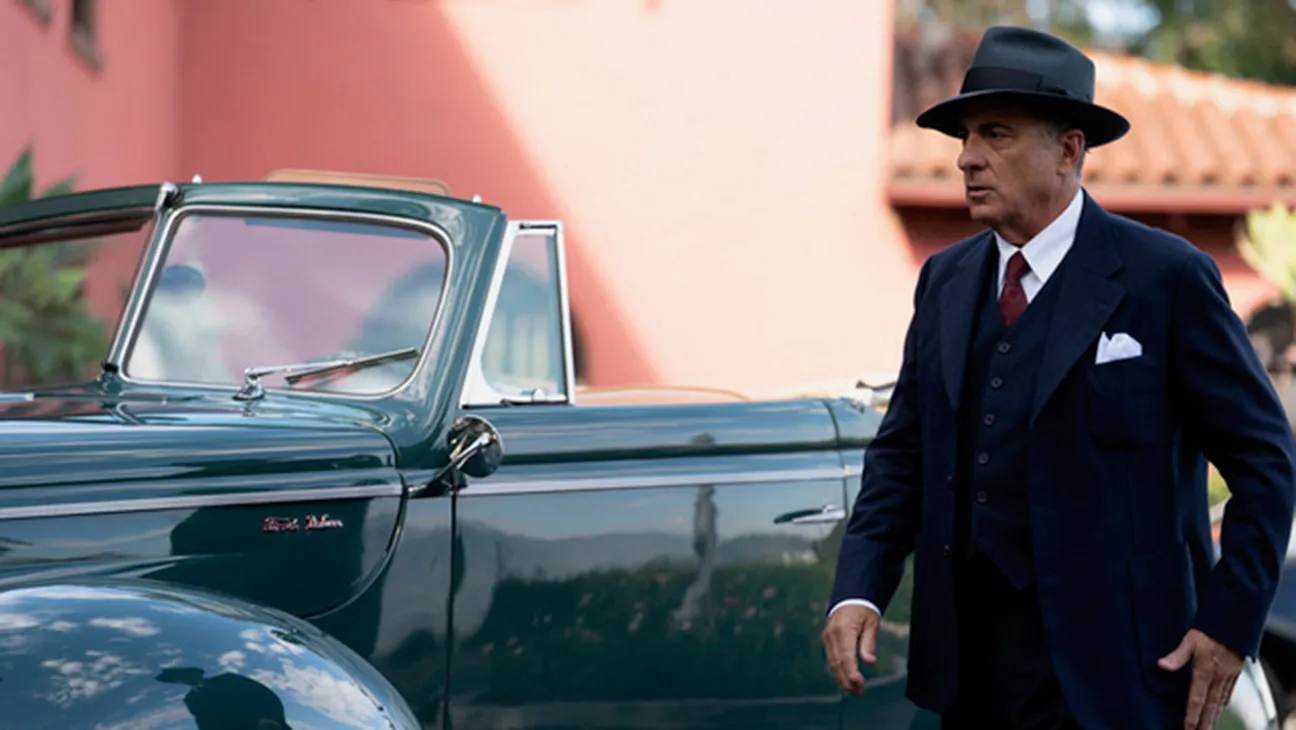
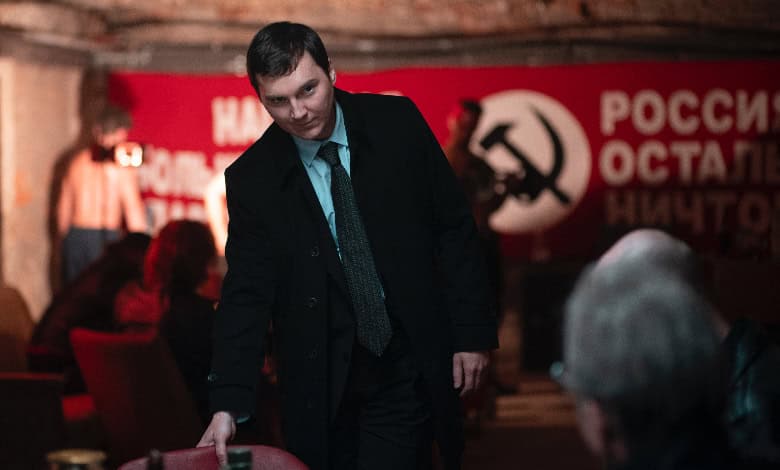
Olivier Assayas’ “The Wizard of the Kremlin” is a disappointment on its own but even more so when you compare it to the filmmaker’s earlier works.
Despite the talent involved and the lure of the subject matter, this won’t be a project anyone involved cites as a career highlight.
Assayas’ film portrays how Vadim Baranov (Paul Dano) went from a young Russian artist to a political mover and shaker during the late 20th century. Baranov has his brushes with history making, particularly when he meets the ambitious Vladimir Putin (Jude Law).
A theater visionary who changed politics, the story of Baranov seems like it can’t miss at the start, but the result is a film with too many scenes of actors on lush couches having conversations about moments in Russian history that we should be seeing.
The opening scenes are stiff and mannered, immediately making me wonder if Assayas was the right filmmaker for this story. Things get wild once the flashback structure kicks in, as we see Baranov emerge in both 1980s excess and USSR espionage.
Based on the 2022 book by Giuliano da Empoli, it shapes an imagined encounter between Baranov and Jeffrey Wright’s fictitious author, whose opening narration I prefer to Dano’s. Baranov is based on the real Vladislav Surkov, whose life should at least merit a compelling non-fiction film.
Baranov proclaims early, “My pain only augmented her boredom.” I know how she felt, as Dano spits out every line in the same whispery British accent. If there’s a way to make this bureaucrat interesting, Dano hasn’t found it.
There’s a mannered, one-note quality to his work here, a major letdown, considering how great he is elsewhere.
To address the obvious – I don’t agree with Quentin Tarantino’s public and unfortunately dismissive assessment of Dano’s acting abilities (nor what he declared regarding Owen Wilson). Dano’s performances in “The Batman” (2022), “Prisoners” (2013) and especially “Love & Mercy” (2015) are Oscar-worthy.
Also, in addition to his canny direction and quotable, unpredictable screenplays, Tarantino has a steady knack for taking underrated actors and casting them in offbeat parts, which showcase their willingness to take on offbeat material.
Dano is wrong for Baranov, but he’s a better actor than Tarantino has stated and can shine in the right role, and the director should know that.
The Batman star Paul Dano opens up about the harsh criticism he received from filmmaker Quentin Tarantino and the stars who came to his defense. https://t.co/Yfc2k7nOP5
— CBR (@CBR) February 25, 2026
“The Wizard of the Kremlin” often cuts to real-life clips and news footage so compelling that this clearly should have been made as a documentary.
The whole thing is too on-again, off-again for 136 minutes and the accents are all over the place. It would have been better with a cast of Russians speaking in subtitles to the what-is-that dialects that are used inconsistently or not at all.
Each narrative section comes with chapter headings, which don’t help. The Law-less sections are dull, which is a major problem, as his performance is, at best, an extended cameo role and he’s barely in the movie.
There are moments to savor, such as the sight of Yeltsin literally being propped up to give a speech. Likewise, I loved hearing Baranov having to explain to Putin who Daft Punk is.
Law has an uncanny resemblance to Putin, but this is undermined by his lack of a Russian accent. With his normal voice and the Putin cut, Law looks a lot more like Martin Freeman. Law is a terrific actor, but his real voice doesn’t match the appearance.
At one point, Law’s Putin declares, “we’re fighting to keep Russia from disintegrating,” suggesting a far more exciting film. Likewise, when Baranov announces in narration, “That day, Putin became a czar.” If only this would take up the focus and not be a passing moment, akin to Forrest Gump meeting JFK. We needed more of the Pygmalion angle on the making of Putin, a subject worth exploring.
Alicia Vikander steals all of her scenes as Ksenia and, like Law, isn’t in the movie nearly enough. There’s a weird cameo appearance from Matthew Baunsgard, unconvincing as Larry King.
Most cinephiles cite Assayas’ “Irma Vep” (1996) and the controversial “Demonlover” (2002) as high points but I think his best was ahead- the 2008 “Summer Hours” (2008), “Clouds of Sils Maria (2014) and the 2018 “Non-Fiction” (which has made me re-think the contemporary definition of a writer).
“Personal Shopper” (2016) remains my favorite Assayas film, a slice of life drama and supernatural thriller that stars Kristen Stewart, a sharp and original film I revisit often.
Assayas’ films aren’t like most others, as they lean into moments and character choices more than cleanly laid out narrative possibilities. The dialogue in his films is a pleasure to listen to. His latest isn’t lacking in ambition but, at best, this is cable TV movie worthy.
The boldest is the very last shot – it’s memorable but comes too late.
Two Stars